

True Grit Rating: 7th Cavalry
Loading the ticket…
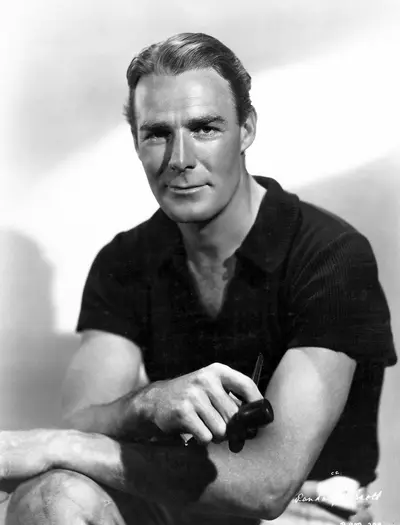
7th Cavalry is a 1956 American Western directed by Joseph H. Lewis for Columbia Pictures, starring Randolph Scott as Captain Tom Benson, an officer of Custer's regiment who returns to his post just after the Battle of the Little Bighorn and finds himself branded a coward for having missed it. To clear his name he leads a burial party of misfits and prisoners back to the battlefield to bring home the bodies of the fallen officers. Barbara Hale plays his fiancée and Jay C. Flippen his loyal old sergeant. The story comes from "A Horse for Mrs. Custer" by Glendon Swarthout, later the author of The Shootist.
Plot
In the summer of 1876 Captain Benson brings his fiancée, Martha Kellogg, to Fort Abraham Lincoln, home of the 7th Cavalry, and finds the post almost deserted. A distraught widow tells him that the regiment has been destroyed at the Little Bighorn, and that the officer who took over his company in his absence was killed there. When the survivors of Major Reno's and Captain Benteen's commands return, they and the widows treat Benson with contempt, believing he dodged the battle; in fact Custer himself had sent him away. Martha's father, Colonel Kellogg, arrives to hold a board of inquiry into the battle, which Benson sees as an attempt to blacken Custer's name.
When orders come from the President to recover the bodies of the officers and bury the men who fell with Custer, Benson volunteers to lead the detail, made up of the guardhouse prisoners and drunkards left at the fort under the old Sergeant Bates. On the way he has to put down several attempts at mutiny. At the battlefield the Sioux, who now hold the ground sacred and do not want their honoured enemies disturbed, surround the burial party. As the stand-off grows tense, a riderless cavalry horse gallops across the field towards the soldiers, and the Sioux, taking it for a sign from Custer's spirit, let the party go in peace. Back at the fort Benson is reconciled with Colonel Kellogg.
Production
The film was produced by Harry Joe Brown with Scott as co-producer, the partnership that also made Scott's Westerns with Budd Boetticher in the same years; it was released between Seven Men from Now (1956) and The Tall T (1957). Swarthout had sold the short story for $2,500. Peter Packer wrote the screenplay, Ray Rennahan photographed it in Technicolor, and it was filmed in Mexico. The cast includes Jeanette Nolan as the grieving widow, Leo Gordon as the troublemaker Vogel and Harry Carey Jr. as a young corporal. Lewis, admired for crime films such as Gun Crazy (1950), regarded it as a routine assignment.
Reception
The film was released in December 1956. It has never been counted among Scott's best Westerns: it is a talkative film, and some critics found it static, but Scott was praised for his solid, believable cavalry officer. Later writers have noted its unusual interest in the Sioux's reverence for the battlefield as holy ground, while finding the ending, with the riderless horse, contrived.
Legend and history
- The real burial detail. The story has a basis in fact. In the summer of 1877, a year after the battle, a company of the 7th Cavalry under Captain Michael V. Sheridan returned to the Little Bighorn. The remains of eleven officers and two civilians were taken up and sent to their families, and the rest of the dead were reburied together on Custer Hill. Custer himself was reburied at the United States Military Academy at West Point on 10 October 1877.
- Who fought Custer. The film speaks of the Sioux, but the warriors at the Little Bighorn were Lakota, Northern Cheyenne and Arapaho; see the Battle of the Little Bighorn page.
Key facts
- Released: December 1956
- Director: Joseph H. Lewis
- Studio: Columbia Pictures
- Producers: Harry Joe Brown, Randolph Scott
- Screenplay: Peter Packer, from the story "A Horse for Mrs. Custer" by Glendon Swarthout
- Stars: Randolph Scott, Barbara Hale, Jay C. Flippen
- Filmed in: Mexico (Technicolor)
- Running time: 75 minutes (data)
- IMDb rating: 5.8 (data)
- Directed by Joseph H. Lewis
- Released 1956
Cast


See also
If you liked this
Picked from this wiki's own links: same film series, same director, same lead actor.


Frontier folk
This film is listed on: Lakota and other Sioux (all Frontier folk)
Gallery 2


True Grit RatingWhat's this?Woke: None foundSVLIMDb ★5.8Partly checked
True Grit score: 99/100, Gold Partly checked
How the score is worked out:
- Start100
- Diamond needs all five checks; not met (raw score under 109; IMDb under 7.0 or under 10,000 votes): 100 → 99
- Presumed (Hays Code, 1934–1967): sex & nudity, violence, language presumed no, counted as checked0
- True Grit score99 · Gold
Classic Western checks
0 of 5 yes · Classic Western · 1 not known
- Called “revisionist”Not knownUnknown.
- Settlers or cavalry as villainsNoNo settlers, cowboys or cavalry are cast as villains as a group: the hero is a 7th Cavalry captain, and the Sioux objection to the burial detail is given its … [1]
more
No settlers, cowboys or cavalry are cast as villains as a group: the hero is a 7th Cavalry captain, and the Sioux objection to the burial detail is given its reasons. - Faith shown negativelyNoNo: Hays-era titles presume no faith attack unless a source flags one.[2]
- History rewrittenNoFictionalised: an invented story using the real Major Reno and Captain Benteen; it does not claim to show a recorded event.[1]
- A people shown as villainsNoNo: the plot source pins the villainy on named individuals, a gang or a specific band, not on a people as a whole.[3]
Woke content (modern messaging)
None found0 of 8 items found so far
Show all 8 (2 not found · 6 not known)
Unless noted: Unknown.
- Characters recast for representationNot known
- Gender roles reversed or critiquedNot known
- Present-day political languageNot known
- Allegory for current politicsNot foundNot an allegory of present-day debates.[1]
- Western civilisation framed as inherently guiltyNot known
- Environmental activismNot foundNo: no source raises an environmental message (5 Nov 2026).[2]
- Source material changed for messagingNot known
- LGBT or gender-identity themesNot known
Content guide
- SSex & nudityPresumed no
- VViolencePresumed no
- LLanguagePresumed no
Presumed no (Hays Code)
NoneMildModerateStrongNot known
Audience
★ 5.8/10 from viewers on IMDb (1.6k votes)No deduction (5.0 and up).
Sources
- AFI Catalog: 7th Cavalry (1956) (checked 24 October 2026)
- Wikipedia: 7th Cavalry
- Dennis Schwartz Reviews: 7th Cavalry
Information courtesy of IMDb (https://www.imdb.com). IMDb rating as of 13 October 2026.
Checked 24 October 2026 · Reviewed by Frontier Editor
Partly checked: 2 checks not known. Not known items are left out of the score.
Member reviews
What members think. Member reviews never change the True Grit score. The True Grit score is worked out by the editors from sources.
Sources
- 7th Cavalry (film) - Wikipedia en.wikipedia.org
- Wikidata: Q4643987 wikidata.org
- IMDb Non-Commercial Datasets developer.imdb.com
- 7th cavalry q29sbgvjdglvbjpwwc0ymzmymjq - bbfc.co.uk bbfc.co.uk
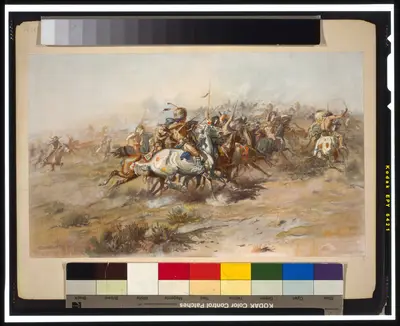
- Wikimedia Commons: Charles Marion Russell - The Custer Fight %281903%29 original.png commons.wikimedia.org
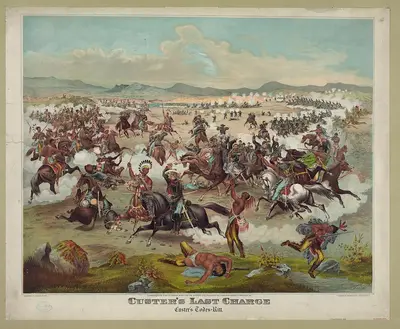
- Wikimedia Commons: Custer%27s last charge LCCN2003688073.jpg commons.wikimedia.org