
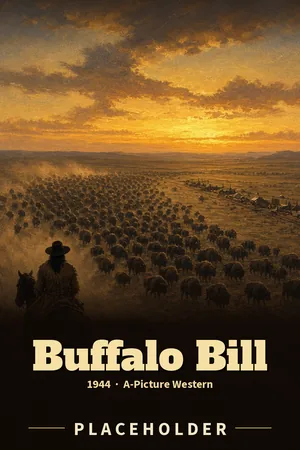

True Grit Rating: Buffalo Bill
Loading the ticket…
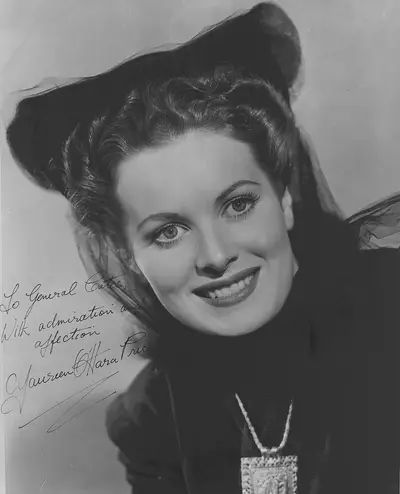
Buffalo Bill is a 1944 American Western directed by William A. Wellman for 20th Century-Fox, starring Joel McCrea as the scout and showman William F. Cody. Maureen O'Hara plays his wife, Louisa Frederici, with Linda Darnell as a Cheyenne schoolteacher, Thomas Mitchell as the dime novelist Ned Buntline, Edgar Buchanan and Anthony Quinn as the Cheyenne leader Yellow Hand. Shot in rich Technicolor, it tells the legend of Buffalo Bill much as Cody liked to tell it himself. It was one of the big hits of 1944, and its battle at War Bonnet Gorge is one of the most exciting action scenes of the period.
Plot
On the plains, the young scout Bill Cody rescues a United States senator and his daughter, Louisa Frederici, from an attack on their wagon, and Louisa eventually becomes his devoted wife. Cody admires and respects the Cheyenne, and he is a friend of Yellow Hand, the son of their chief, and of his sister Dawn Starlight, a schoolteacher who loves Cody. But businessmen and politicians are ready to push a railway through Cheyenne land and destroy the buffalo for profit, and war comes. After Custer's defeat Cody rejoins the army and kills Yellow Hand in hand-to-hand combat at War Bonnet Gorge. Honoured in Washington, he loses his small son to diphtheria and, grief-stricken, speaks out against the men who have wronged the tribes, which ruins his name. Ned Buntline's stories have made him famous, and Buntline persuades him to start a Wild West show in which he and his Cheyenne friends can show their skills. It tours the world, playing to royalty and heads of state.
History behind the film
The film is a romance rather than a biography. Louisa Frederici was not a senator's daughter, and the couple had three other children besides their son Kit Carson Cody, who really died of scarlet fever. The real Cody was a buffalo hunter for the Kansas Pacific Railroad, a civilian scout for the 5th Cavalry and a holder of the Medal of Honor before he became a showman, and Buntline's dime novels about him were mostly invented. The War Bonnet Gorge battle is loosely based on a real skirmish: on 17 July 1876, three weeks after the Little Bighorn, Cody killed a Cheyenne warrior named Yellow Hair, often mistranslated as "Yellow Hand", in a fight at Warbonnet Creek in Nebraska (see Buffalo Bill Cody). The film's long friendship between the two men is fiction. Cody's later sympathy for the Plains peoples, many of whom performed in his Wild West show, is the true part of its message.
Production
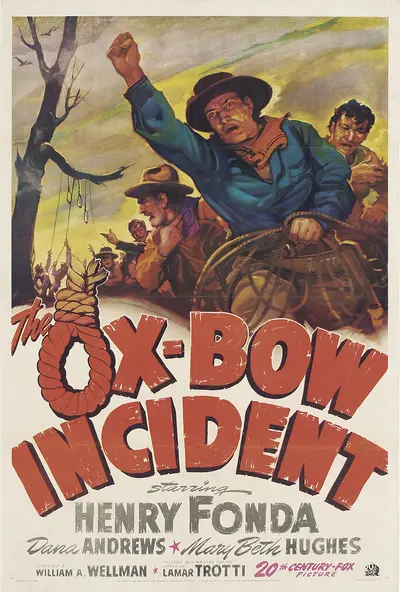
Wellman and the writer Gene Fowler at first wanted to make a film about the less glamorous truth of Cody's life, and spent months researching him. After three months on a script, Fowler decided that it was wrong to destroy a hero whom children worshipped, and the two men burned their pages one at a time in a fireplace. Wellman made the more romantic film that followed largely because he owed 20th Century-Fox a picture for having let him make The Ox-Bow Incident (1943). He later said he disliked its sentimental ending but loved Thomas Mitchell's performance and the two actresses.
Harry Sherman, the producer of the Hopalong Cassidy films, produced it from an unpublished story by Frank Winch, with a screenplay by Aeneas MacKenzie, Clements Ripley and Cecile Kramer, and photography by Leon Shamroy. It was shot on location in Utah, at Kanab, Johnson Canyon, Paria and Zion National Park, and the buffalo-hunting scenes were filmed on the Crow Reservation in Montana; most of the Native American extras were Navajo from Arizona. A planned foreword dedicating the film to the Native American servicemen then fighting in the Second World War was dropped at Darryl F. Zanuck's request. For the War Bonnet Gorge battle Wellman had a river dammed so that a thin sheet of water covered the valley floor; flash floods washed the dam away three times before the scene was finished. The battle footage was so good that Fox used it again in later Westerns, including Pony Soldier (1952) and The Siege at Red River (1954). Some of Linda Darnell's lines as Dawn Starlight speak out against racial prejudice in a way unusual for 1944.
Reception
Audiences loved it: Darryl F. Zanuck told Wellman it was the second-biggest money-maker Fox had made. Maureen O'Hara believed that its Technicolor photography was the reason. Critics were cooler, though all praised the battle scene. The New York Times remarked that, as a romantic fiction, it was "as credible as many of the stories which Cody told about himself", while Variety called it "a magnificent production".
Legend and history
- Print the legend. Fowler's decision not to "kill" a national hero anticipates the famous line about printing the legend in The Man Who Shot Liberty Valance (1962).
- Yellow Hand or Yellow Hair? The Cheyenne warrior Cody killed in 1876 is usually called Yellow Hand in the old accounts and in the film, but his name is better translated as Yellow Hair.
Key facts
- Released: 1944
- Director: William A. Wellman
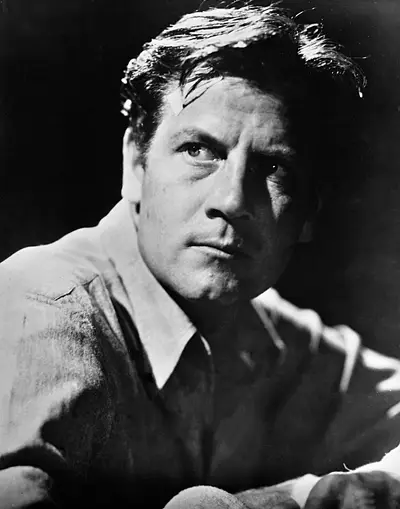
- Stars: Joel McCrea, Maureen O'Hara, Linda Darnell, Thomas Mitchell, Edgar Buchanan, Anthony Quinn
- Producer: Harry Sherman
- Photography: Leon Shamroy (Technicolor)
- Studio: 20th Century-Fox
- Running time: 85 minutes (data)
- IMDb rating: 6.4 (data)
- Directed by William A. Wellman
Cast


See also
If you liked this
Picked from this wiki's own links: same film series, same director, same lead actor.


Frontier folk
This film is listed on: Cheyenne (all Frontier folk)
True Grit RatingWhat's this?Woke: None foundSVLIMDb ★6.4Provisional
True Grit score: 84/100, Silver Provisional
How the score is worked out:
- Start100
- Provisional, capped at Silver: 100 → 84 (3 checks not known, provisional)
- Presumed (Hays Code, 1934–1967): violence, language presumed no, counted as checked0
- True Grit score84 · Silver
Classic Western checks
0 of 5 yes · Classic Western · 2 not known
- Called “revisionist”Not knownUnknown.
- Settlers or cavalry as villainsNoNo settlers are cast as villains: the antagonist is the industrialist Schyler Vandevere, who pushes a railroad through Cheyenne land despite warnings of war.[1]
- Faith shown negativelyNoThe plot shows no clergy or faith portrayed negatively.[2]
- History rewrittenNot knownA film biography of William Frederick Cody; Yellow Hand, Tall Bull and Ned Buntline also appear as characters. [1]
more
A film biography of William Frederick Cody; Yellow Hand, Tall Bull and Ned Buntline also appear as characters. Some incidents are true, such as Cody's fight with the Cheyenne leader Yellow Hand and his Medal of Honor, but others are not: his wife Louisa was not a senator's daughter. Unknown. - A people shown as villainsNoNo: the plot pins villainy on named individuals (not a whole people).[1]
Woke content (modern messaging)
None found0 of 8 items found so far
Show all 8 (2 not found · 6 not known)
Unless noted: Unknown.
- Characters recast for representationNot known
- Gender roles reversed or critiquedNot known
- Present-day political languageNot known
- Allegory for current politicsNot foundReleased in 1944, before the 21st-century debates this item covers, so it cannot be an allegory of them.[1]
- Western civilisation framed as inherently guiltyNot known
- Environmental activismNot foundNo: no source raises an environmental message (5 Nov 2026).[2]
- Source material changed for messagingNot known
- LGBT or gender-identity themesNot known
Content guide
Presumed no (Hays Code)
UK classification advice lists no sex or nudity issues.
Certificates: BBFC U
NoneMildModerateStrongNot known
Audience
★ 6.4/10 from viewers on IMDb (1.8k votes)No deduction (5.0 and up).
Sources
Information courtesy of IMDb (https://www.imdb.com). IMDb rating as of 13 October 2026.
Checked 18 October 2026 · Reviewed by Frontier Editor
Provisional: not enough sources yet, so this rating may change.
Member reviews
What members think. Member reviews never change the True Grit score. The True Grit score is worked out by the editors from sources.
Sources
- Buffalo Bill (1944 film) - Wikipedia en.wikipedia.org
- Wikidata: Q1031953 wikidata.org
- Buffalo Bill - Britannica britannica.com
- IMDb Non-Commercial Datasets developer.imdb.com
- Buffalo bill q29sbgvjdglvbjpwwc0zmjq0nti - bbfc.co.uk bbfc.co.uk