
True Grit Rating: My Name Is Nobody
Loading the ticket…
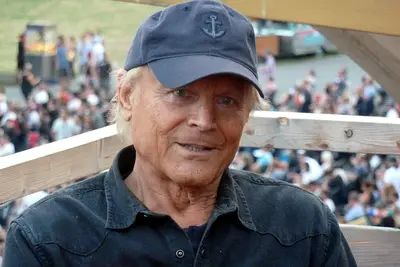
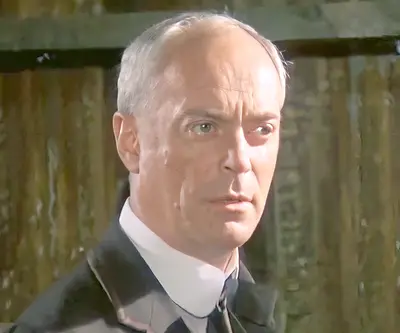
My Name Is Nobody (Italian: Il mio nome è Nessuno) is a 1973 comic spaghetti Western starring Terence Hill and Henry Fonda. It was directed by Tonino Valerii from an idea by Sergio Leone, who produced it, and written by Ernesto Gastaldi. An Italian, West German and French co-production, it follows a cheerful young gunman called Nobody (Hill) as he tries to get his idol, the ageing gunfighter Jack Beauregard (Fonda), to go out in a blaze of glory against the outlaw gang known as the Wild Bunch. Time Out describes it as a Western about how life is turned into legend.
Plot
In 1899 Jack Beauregard is a famous, fading gunslinger who wants only to retire peacefully to Europe. He has to put on spectacles to read but is still deadly with a gun. After he shoots three would-be assassins in a barber's shop, the barber's son asks whether anyone is faster than Beauregard. "Faster than him? Nobody!" comes the reply.
Beauregard soon meets a young drifter who knows every detail of his career and introduces himself as "Nobody". Nobody idolises the old man and has a plan for him: before he leaves, Beauregard should take on the Wild Bunch, a gang of about 150 riders, single-handed, and so earn a place in the history books. Beauregard has other business, including the death of his brother, known only as "the Nevada Kid", and a crooked gold-mining operation. Much of the fun lies in watching Nobody steer events, with tricks, slapstick and lightning-fast shooting, towards the legendary showdown he has imagined.
Production
Shooting began on 30 April 1973 and lasted nine weeks. Unusually for a film connected with Leone, about 80 per cent of the outdoor scenes were shot in the United States, at New Mexico locations including Acoma Pueblo, the ghost town of Cabezon, the old mining town of Mogollon and the gypsum dunes of White Sands, as well as in New Orleans. Further scenes were shot in Almería and Guadix in Spain.
Production was troubled. Valerii fell out with the cinematographer Armando Nannuzzi, who left the film, and shooting stopped for nine days when Fonda's costumes went missing. To save time, Leone offered to direct a second unit, and Valerii accepted. Valerii kept the scenes with Fonda and the desert action, while Leone directed others, including Hill's display of trick shooting in a saloon and parts of the village festival. How much of the film is Leone's work has been disputed ever since, although Valerii is the credited director. Ennio Morricone wrote the score.
Release and reception
The film opened in West Germany and France on 13 and 14 December 1973 and in Italy on 21 December, distributed by Titanus. It sold about 6.2 million tickets in Germany and grossed more than 3.6 billion lire in Italy, where it was the third-highest-grossing film of the year. In the United States it was cut to 111 minutes and, according to the Italian film historian Roberto Curti, "nearly flopped".
Critics were largely positive. Vincent Canby of The New York Times found it "very entertaining", and Penelope Gilliatt of The New Yorker wrote that it had become a film about "skepticism, the pull of stardom, and a reluctant alliance". Time praised Valerii for having fun with the form without lapsing into parody, and later The A.V. Club called it "the definitive spaghetti Western parody".
Legacy
The film came after the comedy They Call Me Trinity (1970) and its sequel had changed the tone of the spaghetti Western, and Hill could still draw large audiences in a post-Trinity Western. The pairing is part of the film's point: Fonda, the villain of Once Upon a Time in the West, plays a legend of the old West, and Hill, the star of the new comic style, plays the young man determined to make him a legend.
Key facts
- Released: 13 December 1973 (West Germany); 21 December 1973 (Italy)
- Director: Tonino Valerii (some scenes directed by Sergio Leone)
- Producer: Fulvio Morsella; presented by Sergio Leone
- Screenplay: Ernesto Gastaldi, from an idea by Sergio Leone
- Music: Ennio Morricone
- Countries: Italy, West Germany, France
- Filmed in: New Mexico and New Orleans, US; Almería and Guadix, Spain
- US version: cut to 111 minutes
- Directed by Tonino Valerii
- Released 1973
Cast

See also
Frontier folk
This film is listed on: The lone gunfighter (all Frontier folk)
True Grit RatingWhat's this?Woke: None foundIMDb ★7.3Partly checked
True Grit score: 84/100, Silver Partly checked
How the score is worked out:
- Start100
- Not a classic Western (comedy Western): capped at Silver: 100 → 84
- True Grit score84 · Silver
Classic Western checks
1 of 5 yes · Mostly classic
- Called “revisionist”YesYes: a comedy parody of the Western, counted as revisionist.[1]
- Settlers or cavalry as villainsNoThe villains are the outlaw gang the Wild Bunch and Sullivan, the mine owner fronting for them.[1]
- Faith shown negativelyNoThe plot shows no clergy or faith portrayed negatively.[1]
- History rewrittenNoFiction with invented characters; it portrays no real historical events or people, so nothing documented is rewritten. [1]
more
Fiction with invented characters; it portrays no real historical events or people, so nothing documented is rewritten. A comedy. - A people shown as villainsNoNo: the plot source pins the villainy on named individuals, a gang or a specific band, not on a people as a whole.[2]
Woke content (modern messaging)
None found0 of 8 items found so far
Show all 8 (4 not found · 4 not known)
Unless noted: Unknown.
- Characters recast for representationNot foundAn original story from an idea by Sergio Leone, with invented characters (no source work and no real people), so no established or …[1]
- Gender roles reversed or critiquedNot known
- Present-day political languageNot known
- Allegory for current politicsNot foundReleased in 1973, before the 21st-century debates this item covers, so it cannot be an allegory of them.[1]
- Western civilisation framed as inherently guiltyNot known
- Environmental activismNot foundNo: no source raises an environmental message (5 Nov 2026).[1]
- Source material changed for messagingNot foundAn original story from an idea by Sergio Leone (no novel, earlier film or established characters), so there is no source to change.[1]
- LGBT or gender-identity themesNot known
Audience
★ 7.3/10 from viewers on IMDb (31k votes)No deduction (5.0 and up).
Sources
- Wikipedia: My Name Is Nobody (checked 17 October 2026)
- Once Upon a Time in a Western: My Name Is Nobody
Information courtesy of IMDb (https://www.imdb.com). IMDb rating as of 13 October 2026.
Checked 17 October 2026 · Reviewed by Frontier Editor
Partly checked: 4 checks not known. Not known items are left out of the score.
Member reviews
What members think. Member reviews never change the True Grit score. The True Grit score is worked out by the editors from sources.
Sources
- My Name Is Nobody - Wikipedia en.wikipedia.org
- Wikidata: Q964009 wikidata.org
- My Name Is Nobody (1973) review - Time Out timeout.com
- The Fastest Anachronism in the West - The New Yorker (1974) newyorker.com
- Cinema: Western Whopper - TIME (Richard Schickel, 1974) time.com
- IMDb Non-Commercial Datasets developer.imdb.com
- Rotten Tomatoes (score via Wikidata) rottentomatoes.com
- Metacritic (score via Wikidata) metacritic.com
- Wikimedia Commons: Il mio nome %C3%A8 Nessuno Fonda.jpg commons.wikimedia.org
- Wikimedia Commons: Il mio nome %C3%A8 Nessuno Hill.jpg commons.wikimedia.org
- Wikimedia Commons: Il mio nome %C3%A8 Nessuno duello.jpg commons.wikimedia.org
- Wikimedia Commons: Il mio nome %C3%A8 Nessuno.jpg commons.wikimedia.org


