
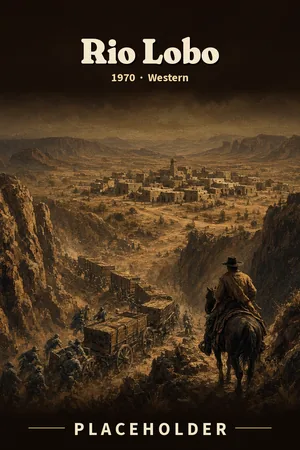

True Grit Rating: Rio Lobo
Loading the ticket…
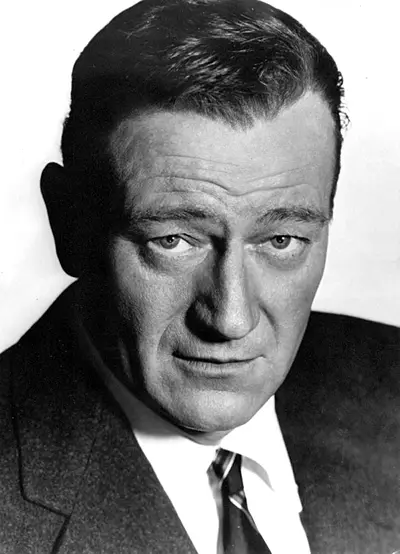
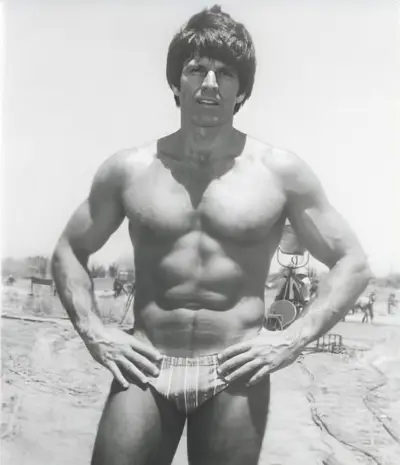
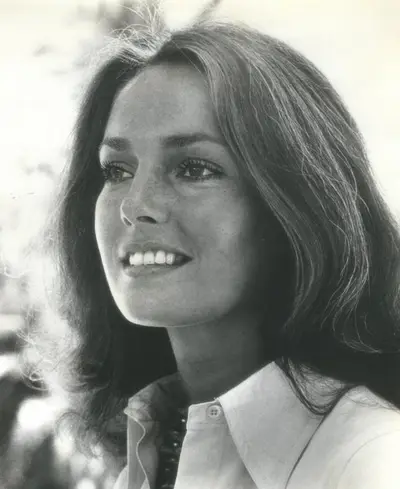
Rio Lobo is a 1970 American Western produced and directed by Howard Hawks, his last film as director. John Wayne stars as a former Union colonel hunting the traitors who sold out an army gold shipment, with Jorge Rivero, Jennifer O'Neill, Jack Elam, Victor French and Susana Dosamantes. Burton Wohl and Leigh Brackett wrote the screenplay, and Jerry Goldsmith composed the score. It completes Hawks's loose trilogy about a few men holding a town's jail against outlaws, after Rio Bravo (1959) and El Dorado (1966). National General Pictures released it on 17 December 1970. It disappointed critics and audiences at the time, though later reviews have been kinder.
Plot
During the Civil War, Confederates led by Captain Pierre Cordona (Rivero) and Sergeant Tuscarora Phillips rob a secret Union payroll train, and Colonel Cord McNally (Wayne) loses a close friend in the raid. The Confederates' detailed knowledge shows that Union traitors must have sold them the information. McNally captures the two men, and the three come to respect one another. After the war Cordona and Tuscarora promise to tell McNally if they ever see the traitors again.
Years later, in Blackthorne, Texas, McNally meets Shasta Delaney (O'Neill), who has come to report a murder by a deputy of the corrupt sheriff of Rio Lobo. In the gunfight that follows, Cordona recognises one of the dead men as a traitor. Tuscarora's father and other ranchers in Rio Lobo are being robbed of their land by a rich man named Ketcham, who has installed his own sheriff. McNally discovers that Ketcham is the second traitor, forces him to sign back the stolen deeds and holes up in the jail to wait for the cavalry. In the final battle, the townspeople rally to McNally's side.
Production
The film was financed by Cinema Center Films. Hawks said he had to fight the company to cast Chris Mitchum, son of Robert Mitchum; he had first wanted Robert Mitchum himself as Cordona, but could not afford his fee. The production was planned for Durango, Mexico, on a $5 million budget, but the film Lawman had taken over the facilities there, and the move to Cuernavaca, in the Mexican state of Morelos, and to Old Tucson Studios in Arizona added another $1 million. The script was rewritten throughout filming. Hawks himself was injured during the train sequence and needed four stitches.
Reception
Rio Lobo earned $4.25 million in rentals, 20th among the year's highest-earning pictures, but that was $2 million short of its $6 million budget. Most early reviews were negative. Variety found "Hawks' direction is as listless as the plot", and Roger Ebert, though giving it three stars out of four, thought it "just a shade tired" after El Dorado. Roger Greenspun of The New York Times stood almost alone in praising it as "close enough to greatness to stand above everything else so far in the current season", which drew angry letters to the paper.
Later critics remain divided. Geoff Andrew in Time Out called it "a marvellous film" even though it lacked the "formal perfection" of Rio Bravo. Jonathan Rosenbaum saw it as showing Hawks's relative lack of engagement with the material, noting that the best action sequence was directed by the second unit. TV Guide called it a sad end to a great career. Quentin Tarantino has cited it as a reason to retire early, saying, "I don't want to make Rio Lobo."
Place in Hawks's work
All three films in the trilogy star Wayne as a man helping to hold a town's jail against a powerful local villain. Rio Lobo frames the story with a Civil War hunt for traitors, and in its final scene the corrupt sheriff is shot by Amelita, a young woman he had disfigured for helping McNally. It was Hawks's final film; he died in 1977.
Key facts
- Director and producer: Howard Hawks
- Screenplay: Burton Wohl and Leigh Brackett
- Music: Jerry Goldsmith
- Distributor: National General Pictures
- Released: 17 December 1970
- Running time: 114 minutes
- Locations: Cuernavaca, Morelos (Mexico); Old Tucson Studios, Arizona
- Directed by Howard Hawks
- Released 1970
Cast


See also
If you liked this
Picked from this wiki's own links: same film series, same director, same lead actor.
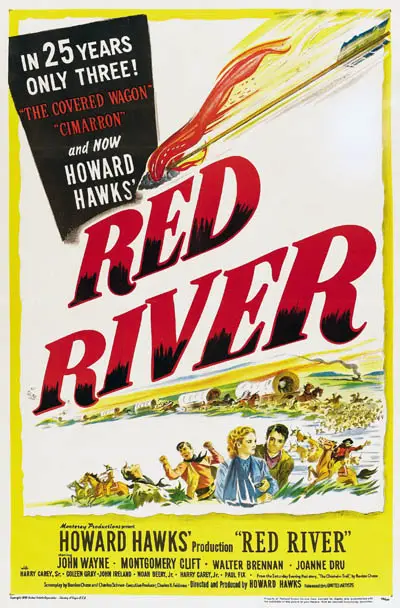 Red River1948Also directed by Howard Hawks
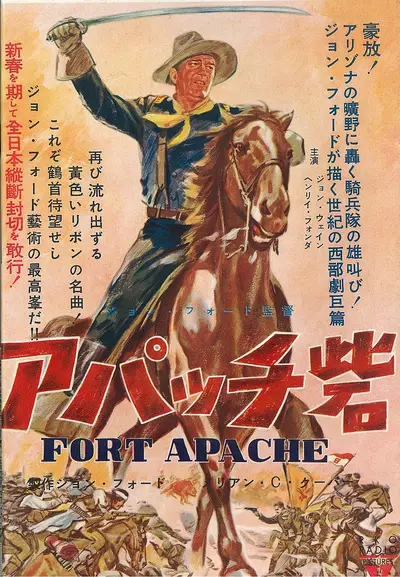 Fort Apache1948Also starring John Wayne
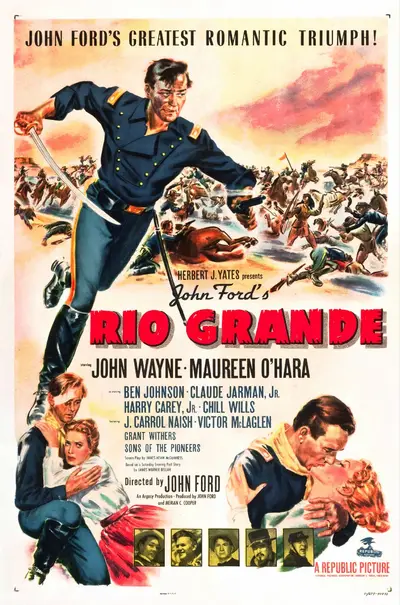 Rio Grande1950Also starring John Wayne


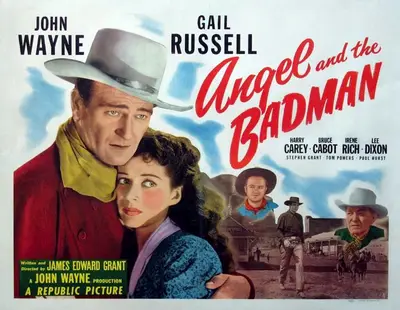 Angel and the Badman1947Also starring John Wayne
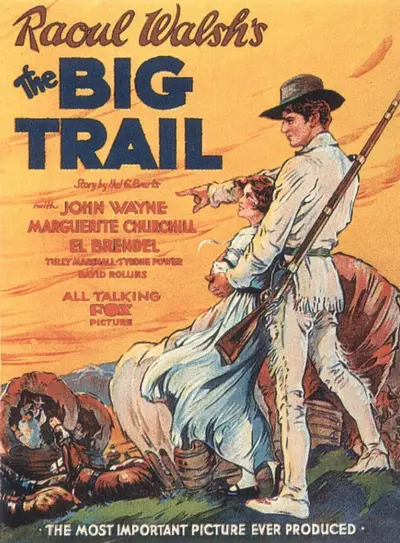 The Big Trail1930Also starring John Wayne
Frontier folk
This film is listed on: Cattle barons, crooked railroad men and bankers · Union and Confederate soldiers and veterans · Corrupt lawmen and officials (all Frontier folk)
True Grit RatingWhat's this?Woke: None foundSVIMDb ★6.7Partly checked
True Grit score: 99/100, Gold Partly checked
How the score is worked out:
- Start100
- Diamond needs all five checks; not met (raw score under 109; IMDb under 7.0 or under 10,000 votes; content guide not complete): 100 → 99
- True Grit score99 · Gold
Classic Western checks
0 of 5 yes · Classic Western
- Called “revisionist”NoOne review calls it a routine, well-bred Western of familiar themes, made in the old style after the revisionist turn.[1]
- Settlers or cavalry as villainsNoThe villains are the land-grabber Ketcham and his crooked sheriff; the ranchers are their victims.[2]
- Faith shown negativelyNoThe plot shows no clergy or faith portrayed negatively.[2]
- History rewrittenNoFiction with invented characters; it portrays no real historical events or people, so nothing documented is rewritten.[2]
- A people shown as villainsNoNo: the plot source names the villains as individuals; no ethnic, national or religious people is the enemy as a group.[3]
Woke content (modern messaging)
None found0 of 8 items found so far
Show all 8 (4 not found · 4 not known)
Unless noted: Unknown.
- Characters recast for representationNot foundAn original story with invented characters (no source work and no real people), so no established or historical figure could be recast.[2]
- Gender roles reversed or critiquedNot known
- Present-day political languageNot known
- Allegory for current politicsNot foundReleased in 1970, before the 21st-century debates this item covers, so it cannot be an allegory of them.[2]
- Western civilisation framed as inherently guiltyNot known
- Environmental activismNot foundNo: no source raises an environmental message (5 Nov 2026).[2]
- Source material changed for messagingNot foundAn original story by Burton Wohl with no established characters; it shares a theme with Hawks's Rio Bravo and El Dorado but is not a …[2][4]
- LGBT or gender-identity themesNot known
Content guide
- SSex & nudityNone[5][6]
- Sexual violence or threatNone[5][6]
- VViolenceMildMild violence (parents' guide).[5]
- LLanguageNot knownUnknown.
UK classification advice lists no sex or nudity issues.
Certificates: BBFC PG MPA G FSK FSK 16
NoneMildModerateStrongNot known
Audience
★ 6.7/10 from viewers on IMDb (15k votes)No deduction (5.0 and up).
Sources
Information courtesy of IMDb (https://www.imdb.com). IMDb rating as of 13 October 2026.
Checked 17 October 2026 · Reviewed by Frontier Editor
Partly checked: 2 checks not known. Not known items are left out of the score.
Member reviews
What members think. Member reviews never change the True Grit score. The True Grit score is worked out by the editors from sources.
Sources
- Rio Lobo - Wikipedia en.wikipedia.org
- Wikidata: Q673437 wikidata.org
- IMDb Non-Commercial Datasets developer.imdb.com
- Rio lobo q29sbgvjdglvbjpwwc0yoda4odq - bbfc.co.uk bbfc.co.uk
- Rotten Tomatoes (score via Wikidata) rottentomatoes.com
- Metacritic (score via Wikidata) metacritic.com