
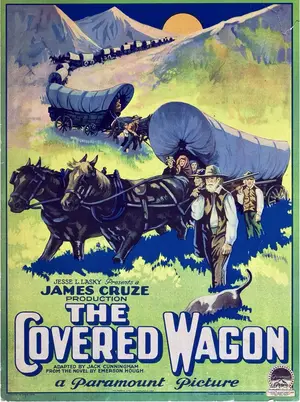

True Grit Rating: The Covered Wagon
Loading the ticket…
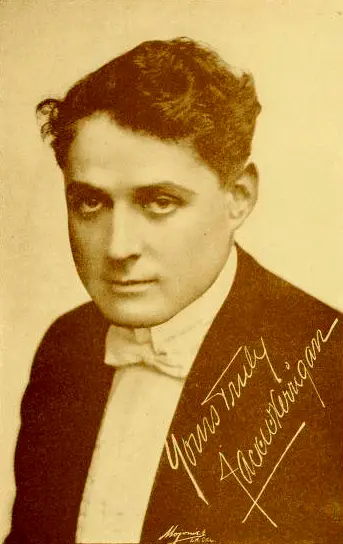
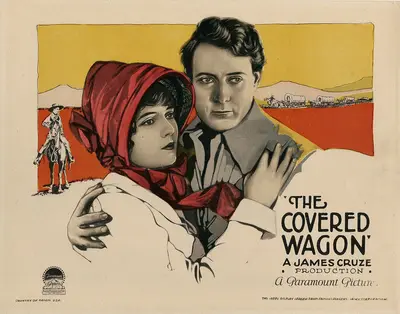
The Covered Wagon is a 1923 American silent epic Western directed by James Cruze and released by Paramount Pictures, starring J. Warren Kerrigan as Will Banion and Lois Wilson as Molly Wingate. Adapted from Emerson Hough's 1922 novel, it follows a great wagon train of pioneer families on the 2,000-mile journey from Kansas to Oregon, through desert heat, mountain snow, hunger and attack. It is often described as the first epic Western filmed entirely on location, and its success changed the Western from a cheap programme filler into a subject for grand, serious pictures. The film entered the public domain in the United States on 1 January 2019.
Plot
In 1848 two wagon trains of emigrants join up in Kansas to travel west to Oregon under the leadership of the elderly Jesse Wingate. The scouts are the hot-headed Sam Woodhull (Alan Hale) and the capable, good-hearted Will Banion, who carries the stain of a crime he is said to have committed in the army. Both men want to lead the train, and both love Wingate's daughter, Molly.
The pioneers struggle through river crossings, storms and hunger. Woodhull provokes clashes along the way, and when news arrives of gold in California, some families leave the train for the gold fields. Banion is helped by his old friend, the frontiersman William Jackson (Ernest Torrence), with the scout Jim Bridger (Tully Marshall) also on hand. Barred by Molly's father from courting her, Banion leaves for California shortly before the train reaches Oregon and strikes it rich. Woodhull follows him and tries to shoot him from ambush, but Jackson kills Woodhull first. Told that Molly is waiting for him, Banion travels to Oregon to be reunited with her.
Production
The film was a very large production for its day, with an estimated budget of $782,000. It was shot in several places, including Palm Springs, California, and locations in Nevada and Utah. The buffalo hunt and stampede were filmed on Antelope Island in the Great Salt Lake.
Many of the wagons on screen were not replicas but real covered wagons that had carried pioneers west, kept as family heirlooms. Paramount offered their owners $2 a day and feed for their animals, and most of the extras are those same families, perfectly at home driving and living out of their wagons. Tim McCoy, later a Western star himself, served as technical adviser and recruited the Northern Arapaho people from Wyoming who appear in the film; he was the only member of the company who could speak with them.
Release and reception
The film premiered at the Rivoli Theatre in New York on 16 March 1923. At that premiere only, a musical soundtrack was played using the DeForest Phonofilm sound-on-film process. It became the second-highest-grossing film of 1923, and President Warren G. Harding, who held a special screening at the White House, named it his favourite film. Its success led Fox to answer with John Ford's railway epic The Iron Horse (1924).
Disputed or inconsistent points
- Running time: accounts differ: the premiere ran 98 minutes; 97 minutes is also given.
- Phonofilm soundtrack: accounts differ on whether the recorded score covered the whole film or only about two reels.
Key facts
- Released: 16 March 1923 (New York premiere)
- Director: James Cruze
- Based on: The Covered Wagon by Emerson Hough (1922)
- Studio: Paramount Pictures (Famous Players–Lasky)
- Budget: about $782,000
- Running time: 98 minutes (premiere)
- Setting: the Oregon Trail, 1848
- Status: public domain in the US since 2019
- Directed by James Cruze
- Released 1923
Cast
See also
Frontier folk
This film is listed on: Mountain men and trappers (all Frontier folk)
Gallery 1

True Grit RatingWhat's this?SVLIMDb ★6.6Provisional
True Grit score: 84/100, Silver Provisional
How the score is worked out:
- Start100
- Provisional, capped at Silver: 100 → 84 (4 checks not known, provisional)
- Presumed (silent era, 1910–1929): sex & nudity, violence, language, faith shown negatively presumed no, counted as checked0
- True Grit score84 · Silver
Classic Western checks
0 of 4 yes · Classic Western · 2 not known
- Called “revisionist”Not knownUnknown.
- Settlers or cavalry as villainsNot knownUnknown.
- Faith shown negativelyPresumed noPresumed no (silent era)
- History rewrittenNoSource passage states the work's basis (quoted). [1]
more
Source passage states the work's basis (quoted). No true-story claim found in the article (rev 1344597842, retrieved 2026-11-06T10:27:07Z). history_rewritten no = owner true-story gate (H2) applied to that: an inference under the owner rule, not a statement by the source. Citation audit 2026-11-06.
Content guide
- SSex & nudityPresumed no
- VViolencePresumed no
- LLanguagePresumed no
Presumed no (silent era)
NoneMildModerateStrongNot known
Audience
★ 6.6/10 from viewers on IMDb (915 votes)No deduction (5.0 and up).
Sources
- Wikipedia: The Covered Wagon (lead; rev 1344597842) (checked 24 October 2026)
Information courtesy of IMDb (https://www.imdb.com). IMDb rating as of 13 October 2026.
Checked 24 October 2026 · Reviewed by Frontier Editor
Provisional: not enough sources yet, so this rating may change.
Member reviews
What members think. Member reviews never change the True Grit score. The True Grit score is worked out by the editors from sources.
Sources
- The Covered Wagon - Wikipedia en.wikipedia.org
- Wikidata: Q587925 wikidata.org
- Wikimedia Commons: The Covered Wagon poster.jpg commons.wikimedia.org
- Wikimedia Commons: Covered Wagon lobby card.jpg commons.wikimedia.org
- The Covered Wagon film by Cruze - Britannica britannica.com
- IMDb Non-Commercial Datasets developer.imdb.com