
Circuit rider
A circuit rider was a travelling preacher, often a Methodist, who rode on horseback around a large district called a circuit, preaching, baptising, marrying, burying and organising small congregations among scattered frontier settlers. Carrying little more than a Bible, a hymn book and a change of clothes in his saddlebags, he might take five or six weeks to ride the whole round. From the 1780s to the late 19th century, circuit riders carried the Christian faith from the Appalachians to the Pacific, and they did more than any other group to make Methodism the largest Protestant church in America.
The Methodist system
The system came from John Wesley's practice in England. In America, Methodist preachers did not wait for a congregation to call them. Instead a bishop appointed each preacher to a circuit at the yearly Annual Conference, and usually moved him on after a year or two, so preachers could be sent wherever new settlers were going. A circuit took in many preaching places: cabins, courthouses, taverns, barns, fields and, once built, small meeting houses. Between visits, local class leaders and lay preachers kept the flock together.
Francis Asbury, one of the first two Methodist bishops in America, set the pattern. Arriving from England in 1771, he travelled the frontier on horseback for decades, riding by common estimate some 270,000 miles, and preached about 16,000 sermons, often with the Black preacher Harry Hosier, known as "Black Harry", whose preaching some hearers thought finer than Asbury's own. Asbury chose young, unmarried men willing to live poor; their yearly allowance was tiny, around $80 at the start of the 19th century, and many died young of fever, cold and exhaustion. Methodism grew from about 15,000 members and 83 travelling preachers in 1784 to some 750,000 members and more than 3,500 travelling preachers in 1839.
On the frontier
Circuit riders followed the settlers into Kentucky, Tennessee, Ohio and Illinois, then beyond the Mississippi. They crossed flooded rivers, slept in the woods or in settlers' cabins, and preached against drinking, gambling, fighting and swearing. They also brought news, books and a sense of order to lonely places, and helped start schools and colleges.
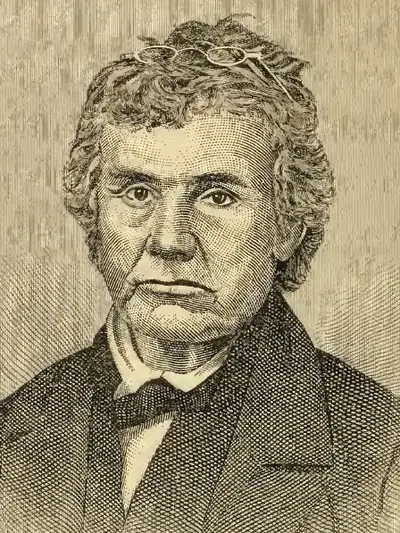
The most famous was Peter Cartwright (1785–1872), a Kentucky backwoodsman converted at a camp meeting who rode circuits in Kentucky, Tennessee, Indiana and Illinois for more than fifty years. He was known for his fiery preaching, his quick wit and, on occasion, his fists, when rowdies tried to break up his meetings. His Autobiography (1856) is one of the liveliest accounts of frontier religion. In 1846 he ran for Congress in Illinois and lost to Abraham Lincoln.
In Texas, the Methodist William Stevenson preached across the Red River from 1815. After Texan independence, the Methodist Church sent Martin Ruter, Littleton Fowler and Robert Alexander as missionaries in 1837, and by 1845 there were some 59 travelling preachers in Texas. The father of the gunfighter John Wesley Hardin was a Methodist circuit preacher in Texas (see John Wesley Hardin). In 1844 American Methodism split into northern and southern churches over slavery, and the Texas conferences went with the Methodist Episcopal Church, South.
Catholic priests rode circuits too. In the Lower Rio Grande Valley, French Oblate missionaries known as the "Cavalry of Christ" served scattered ranches on horseback from the 1850s. Presbyterians, Baptists and others also had their travelling preachers.
In the mining West, preachers followed the gold and silver rushes. William Wesley Van Orsdel, "Brother Van", rode a Montana circuit of some 50,000 square miles from 1872 (see William Wesley Van Orsdel). In Deadwood, the Methodist preacher Henry Weston Smith was killed on the road in 1876 (see Deadwood).
Decline
As towns grew and churches could support a settled minister, the circuit system faded. Many preachers wanted to marry and settle down, and churches came to prefer educated, settled clergy. By the late 19th century the circuit rider belonged mainly to the remoter West.
Legend and history
- "Nothing out but crows and Methodist preachers." This old saying about bad weather, meaning only the most dogged creatures would be out in it, captures the riders' reputation for toughness. It is folklore, but it reflects real hardships.
- The fighting parson. Tales of preachers thrashing bullies who disrupted their services are common, and some, like Cartwright's, come from the preachers themselves. They are colourful but sometimes exaggerated in the telling.
In Westerns
The travelling preacher is a stock figure in Western films and novels, sometimes heroic, sometimes comic, and sometimes a false parson.
Key facts
- Church: chiefly Methodist Episcopal; also Baptist, Presbyterian and Catholic
- Era: 1770s to late 19th century
- Best known: Francis Asbury; Harry Hosier; Peter Cartwright; William Wesley Van Orsdel
- Methodist growth: about 15,000 members (1784) to some 750,000 (1839)
- A circuit rider was a travelling preacher who rode from place to place on horseback, preaching along an established circuit and organising congregations among scattered settlers (American Heritage Dictionary; Random House; Collins).
- William Wesley Van Orsdel ('Brother Van') rode a 50,000-square-mile circuit in Montana from 1872 (Montana Historical Society).
See also
Gallery 1

Sources
- The Journal of the Rev. Francis Asbury, vol. 1 (New York, 1852 ed.) archive.org
- Autobiography of Peter Cartwright, the Backwoods Preacher, ed. W. P. Strickland (1856) archive.org
- Methodist Church – Handbook of Texas Online (Texas State Historical Association) tshaonline.org
- Montana Historical Society, 'Brother Van' biography (PDF) mhs.mt.gov
- Circuit rider (religious) - Wikipedia en.wikipedia.org
- American Heritage Dictionary, "circuit rider" ahdictionary.com
- Random House Unabridged Dictionary via Dictionary.com, "circuit rider" dictionary.com
- Wikidata: Q5121619 wikidata.org
- Wikimedia Commons: Methodist circuit rider in river.png commons.wikimedia.org
- Wikimedia Commons: Peter-Cartwright (cropped).jpg commons.wikimedia.org
