

True Grit Rating: How the West Was Won
Loading the ticket…
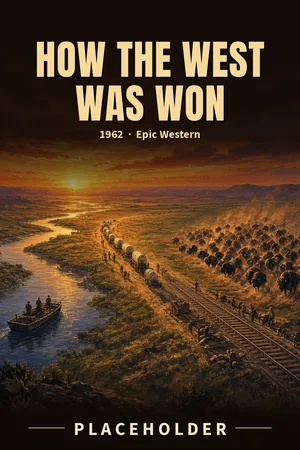
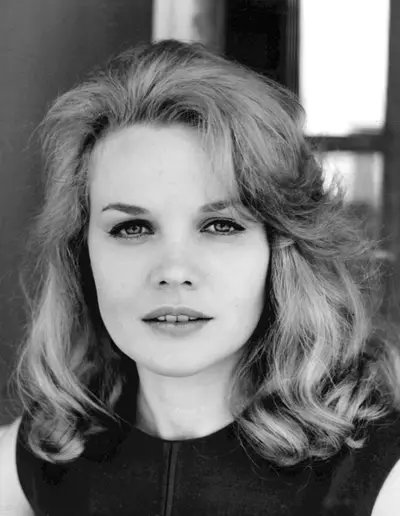
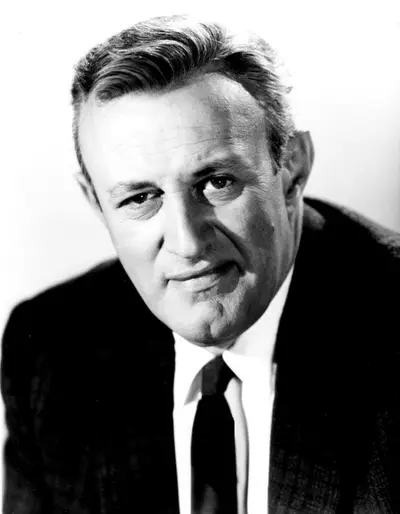
How the West Was Won is a 1962 American epic Western that follows one family over three generations, from the 1830s to the 1880s, as they travel west and help settle the American frontier. Its five chapters were directed by Henry Hathaway ("The Rivers", "The Plains" and "The Outlaws"), John Ford ("The Civil War") and George Marshall ("The Railroad"). James R. Webb wrote the script, Bernard Smith produced it for MGM, and Spencer Tracy narrates. Filmed in the three-camera Cinerama process for showing on giant curved screens, it brought together one of the largest star casts ever assembled, including James Stewart, Gregory Peck, Henry Fonda, John Wayne, Richard Widmark, Debbie Reynolds, Carroll Baker, George Peppard, Karl Malden, Lee J. Cobb, Eli Wallach and Walter Brennan. It is a celebration of the hardiness, faith and courage of the pioneers, and was selected for the US National Film Registry in 1997.
Plot
The Rivers (1839). Zebulon Prescott (Malden), his wife Rebecca and their daughters Eve (Baker) and Lilith (Reynolds) travel west by the Erie Canal and the Ohio River. They meet the mountain man Linus Rawlings (Stewart), who survives an attack by a family of river pirates led by Colonel Hawkins (Brennan) and then helps the Prescotts fight them off. When Zebulon and Rebecca drown in the rapids, Linus helps bury them and marries Eve, who chooses to build a farm where her parents lie.
The Plains (1851). Lilith becomes a dance-hall singer in St Louis and inherits a California gold claim. The charming gambler Cleve Van Valen (Peck) follows her on a wagon train west, hoping to win her fortune, while the wagon master Roger Morgan (Robert Preston) courts her too. The claim proves worthless and Cleve leaves, but the two later meet again on a riverboat and marry.
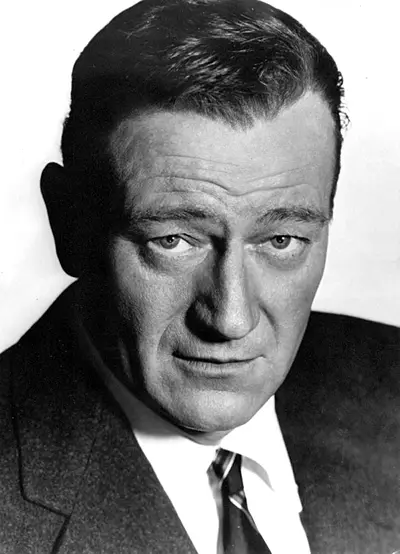
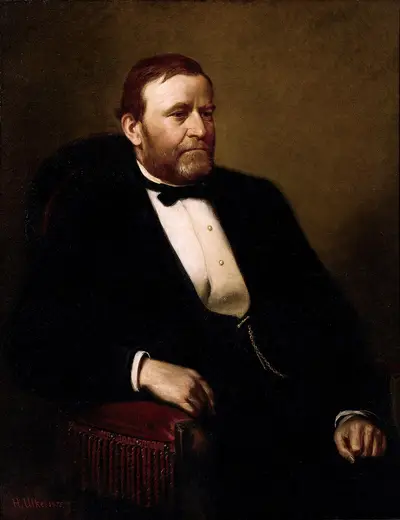
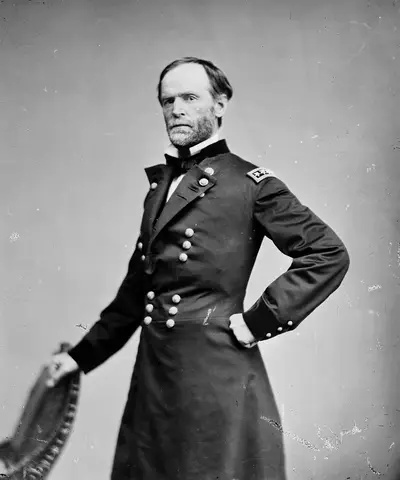
The Civil War (1861–1865). Linus enlists as a Union captain, and his son Zeb (Peppard) follows him to war. At Shiloh Linus is killed. Zeb, sickened by the slaughter, overhears Generals Grant (Harry Morgan) and Sherman (Wayne) and is forced to kill a deserting Confederate soldier who means to shoot them. He returns home to find his mother has died, and stays in the army.
The Railroad (1868). Zeb, now a cavalry officer, tries to keep peace with the Arapaho while the railway pushes west. When the ruthless railway boss Mike King (Widmark) breaks a treaty, the Arapaho stampede a buffalo herd through the railway camp. Disgusted, Zeb resigns and seeks out his father's old friend, the buffalo hunter Jethro Stuart (Fonda).
The Outlaws (1889). Zeb, now a marshal in Arizona with a wife and children, meets the widowed Lilith, who has invited the family to run her last property, a ranch. Charlie Gant (Wallach), an outlaw whose brother Zeb once killed, plans to rob a train carrying gold. With the help of the local marshal Lou Ramsey (Cobb), Zeb defeats the gang in a running gunfight aboard the train, and the family heads for its new home.
Production
The project grew from a Life magazine series on the Old West, which Bing Crosby had planned to turn into a television special and album. MGM bought the rights and announced the film in 1960. Smith hired three veteran directors: "We wanted three old pros, no young geniuses," he said. Filming began in May 1961 with Ford's Civil War chapter, shot in Paducah, Kentucky, and continued in Monument Valley, the Ohio River valley, the Black Hills of South Dakota, the Colorado Rockies and on Oregon's Rogue River.
Cinerama gave stunning pictures but caused great difficulties. Its three cameras photographed a far wider view than normal, so sets had to be much larger, and actors had to look slightly away from one another so that their eyes would appear to meet on the curved screen. A stuntman, Bob Morgan, lost a leg in an accident while filming the train fight. Henry Hathaway later summed up the film's message: "The West was won when the law took over."
Alfred Newman wrote the score, which the American Film Institute ranked 25th among the greatest American film scores. Debbie Reynolds sings "A Home in the Meadow", set to the tune of "Greensleeves".
Release and reception
Unusually for so American a film, it had its world premiere in London, at the Casino Cinerama Theatre on 1 November 1962, where it ran for 123 weeks. It was a huge success, earning about $46.5 million in North America and more than $50 million worldwide. Variety called it a "magnificent and exciting spectacle".
At the Academy Awards it received eight nominations, including Best Picture, and won three: Best Story and Screenplay (James R. Webb), Best Film Editing (Harold F. Kress) and Best Sound (Franklin Milton). Louis L'Amour wrote the novelisation, and the film later inspired a television series of the same name.
Disputed or inconsistent points
- Budget: accounts differ: about $12 million and $15 million are both given.
Key facts
- Released: 1 November 1962 (London premiere)
- Directors: Henry Hathaway, John Ford, George Marshall
- Screenplay: James R. Webb
- Narrator: Spencer Tracy
- Music: Alfred Newman
- Format: three-strip Cinerama
- Studio: Metro-Goldwyn-Mayer and Cinerama
- Running time: 162 minutes
- Box office: more than $50 million worldwide
- Academy Awards: 3 wins from 8 nominations
- National Film Registry: selected 1997
- Directed by John Ford, Henry Hathaway, George Marshall
- Released 1962
- Directed by John Ford, Henry Hathaway and George Marshall
Cast


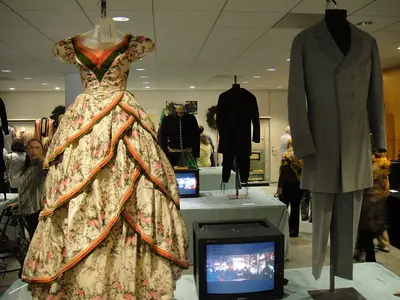
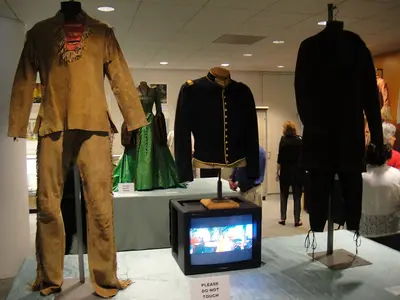
Show full cast (9)
See also
If you liked this
Picked from this wiki's own links: same film series, same director, same lead actor.


Frontier folk
This film is listed on: Cattle barons, crooked railroad men and bankers · Cavalry troopers and frontier scouts · Frontier wives, mothers and widows · Gamblers and saloon owners · Homesteaders, settlers and wagon-train families · Sheriffs, marshals and Texas Rangers · Mountain men and trappers · Outlaws, gangs and robbers · Blacksmiths, railroad workers and prospectors · Arapaho (all Frontier folk)
Gallery 5





True Grit RatingWhat's this?Woke: None foundSVLIMDb ★7.1Partly checked
True Grit score: 99/100, Gold Partly checked
How the score is worked out:
- Start100
- Diamond needs all five checks; not met (raw score under 109): 100 → 99
- Presumed (Hays Code, 1934–1967): violence, language presumed no, counted as checked0
- True Grit score99 · Gold
Classic Western checks
0 of 5 yes · Classic Western
- Called “revisionist”NoNo: a review describes it as a routine, standard, conventional, old-fashioned, traditional or classic Western.[1]
- Settlers or cavalry as villainsNoThe settler family are the protagonists; the main antagonists are the outlaw Charlie Gant's gang and a clan of river pirates. [2]
more
The settler family are the protagonists; the main antagonists are the outlaw Charlie Gant's gang and a clan of river pirates. In the railroad chapter, the railroad man Mike King breaks a treaty by building on Native American territory, and the Arapahos retaliate against his camp. - Faith shown negativelyNoNo: Hays-era titles presume no faith attack unless a source flags one.[2]
- History rewrittenNoA fictional family saga set against historical tableaux; no source alleges that it misstates documented events.[3][4]
- A people shown as villainsNoNo: the plot source pins the villainy on named individuals, a gang or a specific band, not on a people as a whole.[5][6]
Woke content (modern messaging)
None found0 of 8 items found so far
Show all 8 (2 not found · 6 not known)
Unless noted: Unknown.
- Characters recast for representationNot known
- Gender roles reversed or critiquedNot known
- Present-day political languageNot known
- Allegory for current politicsNot foundReleased in 1962, before the 21st-century debates this item covers, so it cannot be an allegory of them.[2]
- Western civilisation framed as inherently guiltyNot known
- Environmental activismNot foundNo: no source raises an environmental message (5 Nov 2026).[2]
- Source material changed for messagingNot known
- LGBT or gender-identity themesNot known
Content guide
Presumed no (Hays Code)
UK classification advice lists no sex or nudity issues.
Certificates: BBFC PG FSK FSK 12
NoneMildModerateStrongNot known
Audience
★ 7.1/10 from viewers on IMDb (26k votes)No deduction (5.0 and up).
Sources
- True West: How the West Was Won
- Wikipedia: films/how-the-west-was-won-1962 (lead)
- HistoryNet, “Into the West's outlook on Manifest Destiny vs. How the West Was Won” (checked 17 October 2026)
- in70mm.com, introduction by Sir Christopher Frayling (checked 17 October 2026)
- Once Upon a Time in a Western: How the West Was Won
- Dennis Schwartz Reviews: How the West Was Won
- bbfc.co.uk/release/how-the-west-was-won-q29sbgvjdglvbjpwwc0ynzc0ote
Information courtesy of IMDb (https://www.imdb.com). IMDb rating as of 13 October 2026.
Checked 17 October 2026 · Reviewed by Frontier Editor
Partly checked: 1 check not known. Not known items are left out of the score.
Member reviews
What members think. Member reviews never change the True Grit score. The True Grit score is worked out by the editors from sources.
Sources
- How the West Was Won (film) - Wikipedia en.wikipedia.org
- Wikidata: Q162518 wikidata.org
- Wikimedia Commons: Poster - How the West Was Won.jpg commons.wikimedia.org
- How the West Was Won film by Ford Hathaway and Marshall - Britannica britannica.com
- IMDb Non-Commercial Datasets developer.imdb.com
- How the west was won q29sbgvjdglvbjpwwc0ynzc0ote - bbfc.co.uk bbfc.co.uk
- Rotten Tomatoes (score via Wikidata) rottentomatoes.com
- Wikimedia Commons: Debbie Reynolds Auction - Debbie Reynolds and Gregory Peck costumes from %22How the West Was Won%22.jpg commons.wikimedia.org
- Wikimedia Commons: Debbie Reynolds Auction - James Stewart, George Peppard, and Gregory Peck costumes from %22How the West Was Won%22.jpg commons.wikimedia.org
- Wikimedia Commons: Gregory Peck and Debbie Reynolds How the West Was Won still.jpg commons.wikimedia.org
- Wikimedia Commons: HTWWW001.png commons.wikimedia.org
- Wikimedia Commons: HTWWW002.jpg commons.wikimedia.org
- Wikimedia Commons: HTWWW003.png commons.wikimedia.org
- Wikimedia Commons: HTWWW003crop.jpg commons.wikimedia.org
- Wikimedia Commons: How the West Was Won premiere photo.jpg commons.wikimedia.org
- Wikimedia Commons: Ugrant.jpeg commons.wikimedia.org
- Wikimedia Commons: William tecumseh sherman.jpg commons.wikimedia.org
- Wikimedia Commons: Abraham Lincoln O-77 matte collodion print.jpg commons.wikimedia.org


