

True Grit Rating: Sergeant Rutledge
Loading the ticket…
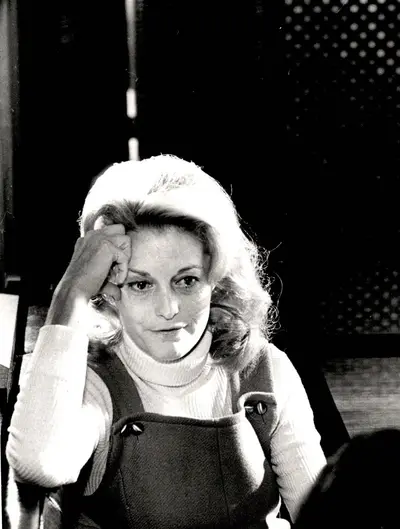
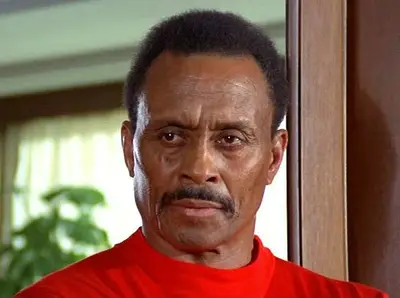
Sergeant Rutledge is a 1960 American Technicolor Western directed by John Ford, starring Jeffrey Hunter, Constance Towers, Woody Strode and Billie Burke. Strode plays Braxton Rutledge, a Black first sergeant in one of the U.S. Cavalry's colored regiments known as the Buffalo Soldiers. In the early 1880s, at an Army fort, he is court-martialled for the rape and murder of a white girl and the murder of her father, the fort's commanding officer. The story unfolds through a series of flashbacks. The film still attracts attention because it was one of the first mainstream American films to deal frankly with racism and to star a Black actor.
Plot
In 1881, Rutledge, of the 9th U.S. Cavalry, goes on trial. He is defended by his own troop officer, Lieutenant Tom Cantrell. The court is presided over by Lieutenant Colonel Otis Fosgate, whose wife, Cordelia, watches from the gallery. Witnesses describe in flashback what happened after the killing of Major Custis Dabney and the rape and murder of his daughter, Lucy.
The evidence against Rutledge is circumstantial, but he deserted after the killings, which looks like guilt. Mary Beecher, a woman Cantrell is drawn to, testifies in his favour: Rutledge saved her life during an Apache attack. In another flashback, Cantrell tracks Rutledge down and arrests him. Rutledge escapes during a raid, but returns to warn his fellow troopers of an ambush and fights beside them, including Sergeant Matthew Luke Skidmore. A guilty verdict from the all-white court seems certain, and the local onlookers enjoy the show. Then Cantrell, questioning the witness Chandler Hubble, draws out a confession, and Rutledge is cleared.
Production
Willis Goldbeck, the film's co-producer, wrote the screenplay with James Warner Bellah, and once it was finished they recruited Ford to direct. Bellah had written the stories behind Ford's "cavalry trilogy": Fort Apache (1948), She Wore a Yellow Ribbon (1949) and Rio Grande (1950). Bellah also turned the screenplay into a novel, published under the same title when the film came out. The working titles were Captain Buffalo and The Trial of Sergeant Rutledge. Parts of the film were shot in Monument Valley and on the San Juan River at Mexican Hat, Utah, locations Ford had used many times.
The film mixes a courtroom drama and a mystery with the cavalry Western. That puts it alongside the trilogy among the cavalry Westerns, but its focus on a Black soldier facing a white court sets it apart.
Release
For the American release in 1960, the advertising used a familiar gimmick. Audiences were warned that no one would be seated during the last ten minutes, to protect the suspense. Some newspapers carried a fake classified advertisement asking anyone with information about "what Sergeant Rutledge did" to contact Mary Beecher. In Spain the film was released as El Sargento Negro and in France as Le sergent noir, both meaning "The Black Sergeant". In Italy it was I dannati e gli eroi ("The Damned and the Heroes").
Reception
Howard Thompson of The New York Times called it "a good picture—thoughtful, well-acted, biting, interesting and stimulating". He added that it might not be "Mr. Ford's finest hour (and a half), but it certainly is Mr. Strode's". Mildred Martin of The Philadelphia Inquirer was much harsher. She blamed an uneven script and what she called Ford's "tasteless, slipshod direction". She also objected to comic scenes involving Burke and the court-martial officers in a story about a man fighting racial prejudice for his life. The film did poorly in American cinemas, grossing $784,000 in the US and $1.7 million elsewhere.
Key facts
- Released: 1960
- Director: John Ford
- Screenplay: Willis Goldbeck, James Warner Bellah
- Setting: an Army fort, 1881
- Filmed in: Monument Valley; San Juan River at Mexican Hat, Utah
- Box office: $784,000 (US); $1.7 million (elsewhere)
- Directed by John Ford
Cast

See also
If you liked this
Picked from this wiki's own links: same film series, same director, same lead actor.


Frontier folk
This film is listed on: Cavalry troopers and frontier scouts (all Frontier folk)
True Grit RatingWhat's this?Woke: None foundSVLIMDb ★7.4Partly checked
True Grit score: 99/100, Gold Partly checked
How the score is worked out:
- Start100
- Diamond needs all five checks; not met (raw score under 109; IMDb under 7.0 or under 10,000 votes): 100 → 99
- Presumed (Hays Code, 1934–1967): sex & nudity, violence, language presumed no, counted as checked0
- True Grit score99 · Gold
Classic Western checks
1 of 5 yes · Mostly classic
- Called “revisionist”YesYes (owner title ruling, 11 Nov 2026): AllMovie files it as a Courtroom Drama and Social Problem Film and says it takes on Western racism; reviews by Dennis … [1][2][3][4]
more
Yes (owner title ruling, 11 Nov 2026): AllMovie files it as a Courtroom Drama and Social Problem Film and says it takes on Western racism; reviews by Dennis Schwartz, The New Yorker and Senses of Cinema are kept. - Settlers or cavalry as villainsNoNo: the villains are individuals, a gang, a boss, a posse or a cattle baron, not settlers as a group. [2][5][4][6][7]
more
No: the villains are individuals, a gang, a boss, a posse or a cattle baron, not settlers as a group. The murderer is a single civilian, Chandler Hubble. Rutledge is defended by his troop officer, Lt. Tom Cantrell, and Mary Beecher gives evidence in his favour. A guilty verdict from the all-White military court appears inevitable, and the locals enjoy the spectacle, with an angry mob of townspeople in the courtroom. - Faith shown negativelyNoThe plot shows no clergy or faith portrayed negatively.[5]
- History rewrittenNoFiction with invented characters, set among the real Black regiments of the 9th Cavalry in the Apache campaigns.[5][8][9]
- A people shown as villainsNoNo: the plot source pins the villainy on named individuals, a gang or a specific band, not on a people as a whole.[2]
Woke content (modern messaging)
None found0 of 8 items found so far
Show all 8 (4 not found · 4 not known)
Unless noted: Unknown.
- Characters recast for representationNot foundAn original story with invented characters (no source work and no real people), so no established or historical figure could be recast.[5]
- Gender roles reversed or critiquedNot known
- Present-day political languageNot known
- Allegory for current politicsNot foundReleased in 1960, before the 21st-century debates this item covers, so it cannot be an allegory of them.[5]
- Western civilisation framed as inherently guiltyNot known
- Environmental activismNot foundNo: no source raises an environmental message (5 Nov 2026).[5]
- Source material changed for messagingNot foundAn original screenplay (no novel, earlier film or established characters), so there is no source to change.[5]
- LGBT or gender-identity themesNot known
Content guide
- SSex & nudityPresumed no
- VViolencePresumed no
- LLanguagePresumed no
Presumed no (Hays Code)
NoneMildModerateStrongNot known
Audience
★ 7.4/10 from viewers on IMDb (6.3k votes)No deduction (5.0 and up).
Sources
- AllMovie: Sergeant Rutledge (Wayback copy, 24 Jun 2012), review by Lucia Bozzola (accessed 11 November 2026)
- Dennis Schwartz Reviews: Dennis Schwartz review
- The New Yorker: New Yorker (Brody) (6 July 2015)
- Senses of Cinema (Tracy) (2004)
- Wikipedia: Sergeant Rutledge (plot) (checked 18 October 2026)
- TCM article, “Sergeant Rutledge”
- Collider, “Sergeant Rutledge”
- AFI Catalog: Sergeant Rutledge (1960) (checked 18 October 2026)
- Variety, Sergeant Rutledge review (1959) (checked 18 October 2026)
Information courtesy of IMDb (https://www.imdb.com). IMDb rating as of 13 October 2026.
Checked 18 October 2026 · Reviewed by Frontier Editor
Partly checked: 1 check not known. Not known items are left out of the score.
Member reviews
What members think. Member reviews never change the True Grit score. The True Grit score is worked out by the editors from sources.
Sources
- Sergeant Rutledge - Wikipedia en.wikipedia.org
- Wikidata: Q599885 wikidata.org
- Wikimedia Commons: SergeantRutledgePoster.jpg commons.wikimedia.org
- Sergeant Rutledge - Britannica britannica.com
- IMDb Non-Commercial Datasets developer.imdb.com
- Sergeant rutledge q29sbgvjdglvbjpwwc0ynju3mdi - bbfc.co.uk bbfc.co.uk
- Rotten Tomatoes (score via Wikidata) rottentomatoes.com
- Wikimedia Commons: Jeffrey Hunter Sgt Rutledge.jpg commons.wikimedia.org
- Wikimedia Commons: Sergeant Rutledge image.jpg commons.wikimedia.org
- Wikimedia Commons: Woody Strode as Sergeant Rutledge.jpg commons.wikimedia.org


