

True Grit Rating: The Great Train Robbery
Loading the ticket…
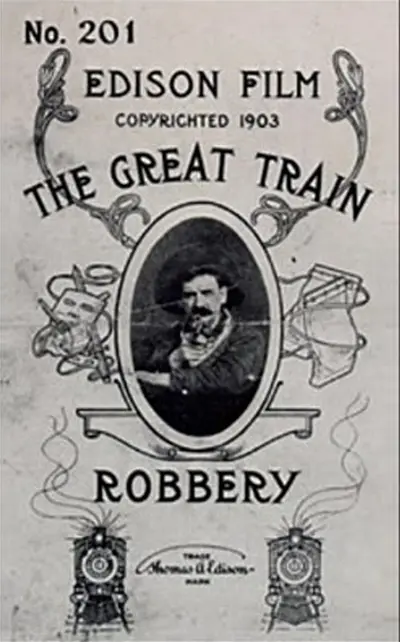
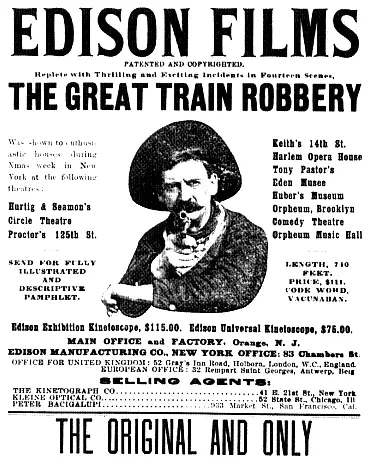
The Great Train Robbery is a 1903 American silent short film directed by Edwin S. Porter for the Edison Manufacturing Company. Running about twelve minutes, it tells the story of an armed hold-up of a steam train, the outlaws' escape and their pursuit by a posse. It is often called the first Western, and it is certainly one of the most influential early films of any kind.
Plot
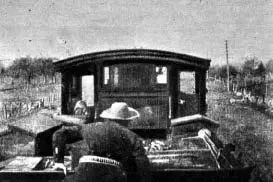
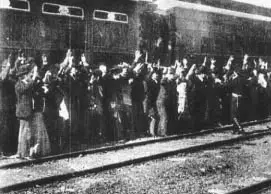
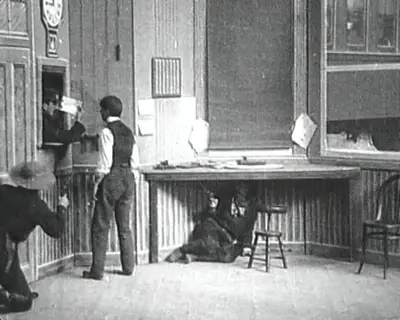
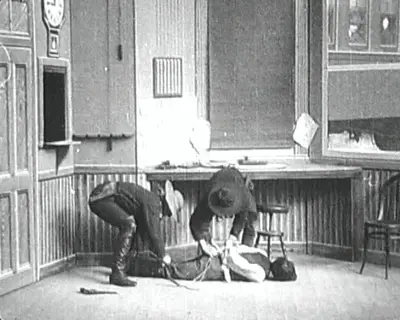
Bandits force a telegraph operator to signal a train to stop, then board it, rob the mail car and the passengers, and kill a man who tries to flee. They uncouple the locomotive and escape, and then take to their horses. The telegraph operator is found, a dance hall full of townsfolk is roused, and a posse rides out after the gang. The film ends in a gunfight in the woods in which the robbers are killed.
Why it matters
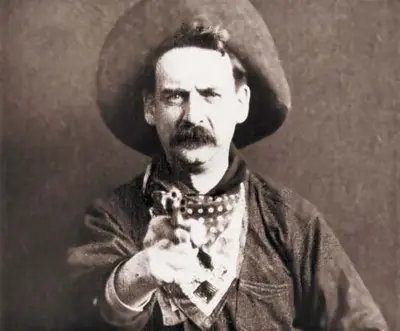
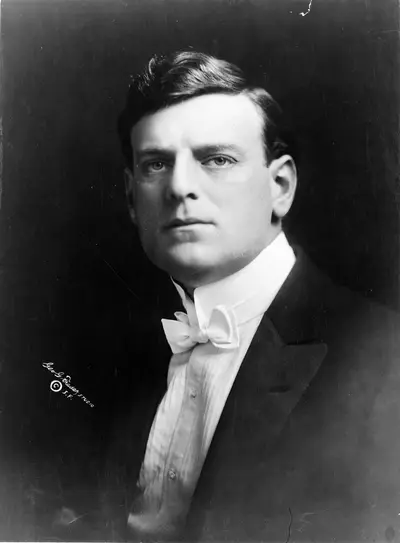
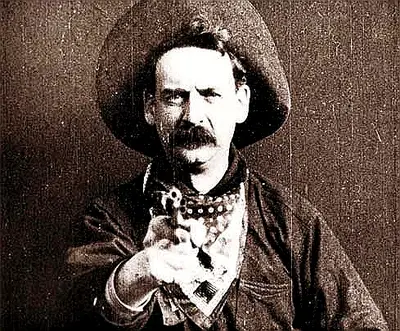
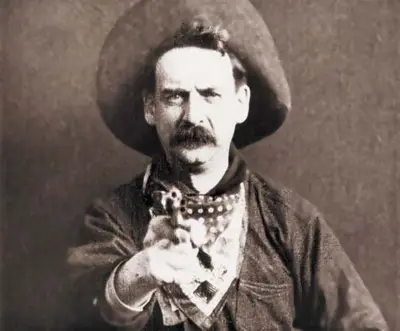
Porter cut between different places and storylines, such as the robbers' flight and the raising of the posse, at a time when most films were a single scene. The film also has a famous extra shot: a close-up of the outlaw leader, played by Justus D. Barnes, firing his revolver straight at the audience. Cinema owners could show it at the start or at the end. G. M. Anderson, who appears in several small roles, went on to become "Broncho Billy", one of the first Western film stars.
The film was shot in New Jersey, not the West, but audiences flocked to it, and it helped turn the Western into a lasting genre. In 1990 it was among the films chosen for the United States National Film Registry. It is in the public domain.
Key facts
- Released: 1903
- Director: Edwin S. Porter
- Studio: Edison Manufacturing Company
- Cast: Justus D. Barnes, G. M. Anderson
- Format: Silent, black and white, about twelve minutes
- Directed by Edwin Stanton Porter
- Made by Edwin S. Porter for the Edison Manufacturing Company
- Silent short film
Cast

See also
Frontier folk
This film is listed on: Outlaws, gangs and robbers · Posses (all Frontier folk)
Gallery 8








True Grit RatingWhat's this?Woke: None foundIMDb ★7.2Partly checked
True Grit score: 99/100, Gold Partly checked
How the score is worked out:
- Start100
- Diamond needs all five checks; not met (raw score under 109; content guide not complete): 100 → 99
- True Grit score99 · Gold
Classic Western checks
1 of 5 yes · Mostly classic
- Called “revisionist”YesYes (R6): Wikipedia's Revisionist Western page lists the film among revisionist Westerns.[1]
- Settlers or cavalry as villainsNoThe villains are a gang of outlaws who rob a train; a posse of locals chases and defeats them.[2]
- Faith shown negativelyNoThe plot shows no clergy or faith portrayed negatively.[2]
- History rewrittenNoFiction with invented characters; it portrays no real historical events or people, so nothing documented is rewritten. [2]
more
Fiction with invented characters; it portrays no real historical events or people, so nothing documented is rewritten. A 1903 silent short. - A people shown as villainsNoNo: the plot source names the villains as individuals; no ethnic, national or religious people is the enemy as a group.[3]
Woke content (modern messaging)
None found0 of 8 items found so far
Show all 8 (2 not found · 6 not known)
Unless noted: Unknown.
- Characters recast for representationNot known
- Gender roles reversed or critiquedNot known
- Present-day political languageNot known
- Allegory for current politicsNot foundReleased in 1903, before the 21st-century debates this item covers, so it cannot be an allegory of them.[2]
- Western civilisation framed as inherently guiltyNot known
- Environmental activismNot foundNo: no source raises an environmental message (5 Nov 2026).[2]
- Source material changed for messagingNot known
- LGBT or gender-identity themesNot known
Audience
★ 7.2/10 from viewers on IMDb (23k votes)No deduction (5.0 and up).
Sources
Information courtesy of IMDb (https://www.imdb.com). IMDb rating as of 13 October 2026.
Checked 17 October 2026 · Reviewed by Frontier Editor
Partly checked: 4 checks not known. Not known items are left out of the score.
Member reviews
What members think. Member reviews never change the True Grit score. The True Grit score is worked out by the editors from sources.
Sources
- The Great Train Robbery (1903 film) - Wikipedia en.wikipedia.org
- Wikidata: Q470329 wikidata.org
- Wikimedia Commons: The Great Train Robbery, Edwin S. Porter, Edison Films, 1903 Poster.jpg commons.wikimedia.org
- Wikimedia Commons: Great train robbery Barnes.jpg commons.wikimedia.org
- The Great Train Robbery film by Porter - Britannica britannica.com
- IMDb Non-Commercial Datasets developer.imdb.com
- Rotten Tomatoes (score via Wikidata) rottentomatoes.com
- Wikimedia Commons: Great Train Robbery Poster.jpeg commons.wikimedia.org
- Wikimedia Commons: Great Train Robbery newspaper ad.gif commons.wikimedia.org
- Wikimedia Commons: Great train robbery still.jpg commons.wikimedia.org
- Wikimedia Commons: Great-train robbery 1903(21).jpg commons.wikimedia.org
- Wikimedia Commons: Grreat-train robbery 1903(10).jpg commons.wikimedia.org
- Wikimedia Commons: The Great Train Robbery 0001.jpg commons.wikimedia.org
- Wikimedia Commons: The Great Train Robbery 0002.jpg commons.wikimedia.org