
Spanish Mustang
The Spanish Mustang is an American horse breed built from the surviving descendants of the horses brought from Spain in the early days of the conquest of the Americas. By the early twentieth century those once-vast herds had shrunk and mixed with other blood, and a handful of determined Western horsemen set out to gather the last horses of the old type before they disappeared. Their work produced one of the first deliberate rescue programmes for any American horse, and a breed registry founded in 1957.
The Brislawn brothers
The effort is credited above all to Robert E. Brislawn of Oshoto, Wyoming, and his brother Ferdinand of Utah, together with other breeders such as Gilbert Jones and Ilo Belsky. They searched wild herds, Native American herds and old ranch stock across the West for horses that looked and moved like the Spanish horses of old. Among the first foundation stallions were two full brothers, Buckshot and Ute, sired by a buckskin stallion named Monty. Monty had been captured in Utah in 1927; in 1944 he broke out and returned to the wild with his mares, and he was never caught again. In 1957 the Brislawns and Lawrence P. Richards incorporated the Spanish Mustang Registry. Differences over which horses to accept later led Jones to found the Southwest Spanish Mustang Association in 1977, and other registries followed.
Not the same as a wild mustang
The Spanish Mustang is a domestic breed, kept and recorded by its registries. The wild mustangs of the Bureau of Land Management ranges are a different matter: they descend from Spanish horses but also from ranch horses, cavalry remounts and draught horses that escaped or were turned loose. DNA studies have found strong Spanish ancestry in a few wild herds, notably the Cerbat herd of Arizona, the Pryor Mountain herd of Montana, the Sulphur Springs herd of Utah and the Kiger herd of Oregon, and in the Spanish Mustang itself. The breed belongs to the wider Colonial Spanish horse family.
Looks and ability
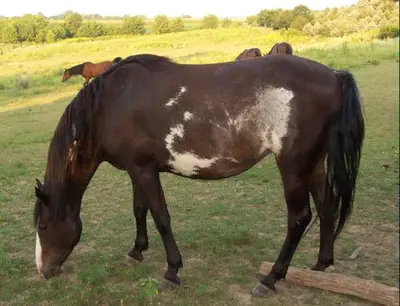
Spanish Mustangs are small, standing about 13.2 to 15 hands, and breeders do not favour horses over 15 hands. They have short backs, rounded rumps, low-set tails, deep girths and hard, round feet, with a straight or slightly concave face. Colours range widely, reflecting their Spanish forebears: bay, chestnut, black and grey are common, and grullo, buckskin, palomino, roan, pinto and Appaloosa-type patterns also occur. Some have smooth gaits besides the usual walk, trot and canter. Above all they are known for stamina and toughness, and many are ridden in long-distance endurance events as well as Western and English classes.
Key facts
- Type: American breed of Colonial Spanish type
- Ancestry: Spanish horses of the conquest, gathered from wild, Native and ranch herds
- Registry: Spanish Mustang Registry, incorporated 1957
- Key founders: Robert E. and Ferdinand Brislawn; Gilbert Jones; Ilo Belsky
- Height: about 13.2–15 hands (137–152 cm)
- Known for: stamina, hardiness, endurance riding
- Instance of: horse breed (Wikidata P31)
See also
Gallery 1

Sources
- Spanish Mustang - Wikipedia en.wikipedia.org
- Wikidata: Q3328902 wikidata.org
- Wikimedia Commons: SpanishMustang.jpg commons.wikimedia.org
- Wikimedia Commons: Gypsypasturepic1.jpg commons.wikimedia.org
