
✦ Legend
Probably, but it has never been proven. The best evidence is that Butch Cassidy and the Sundance Kid died after a shoot-out with a Bolivian patrol at San Vicente in November 1908, though some reference works give 1909. Nobody who knew them identified the bodies, and a grave dug up there in 1991 held someone else.Sources: The Mysterious Deaths of Butch Cassidy and the Sundance Kid, History.com, 13 April 2016 (accessed 27 October 2026) · Butch Cassidy | Biography, Encyclopaedia Britannica (accessed 27 October 2026)
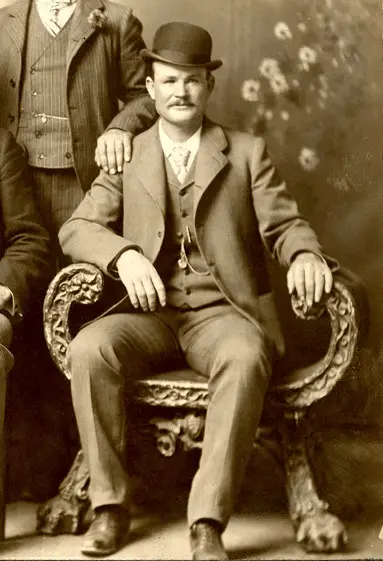
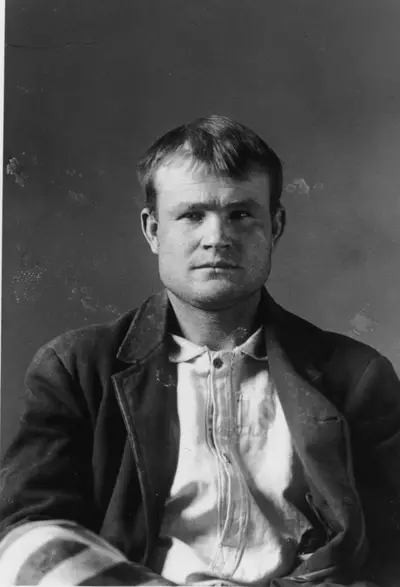
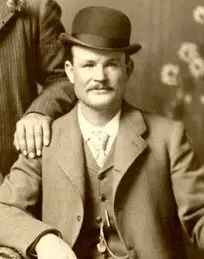
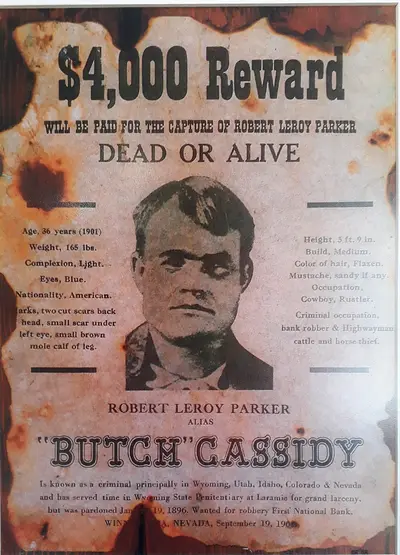
Butch Cassidy was the alias of Robert LeRoy Parker (1866–1908?), a Utah-born cowboy who became the leader of the "Wild Bunch", the gang behind a long run of bank and train robberies across the Rocky Mountain West in the 1890s. Pursued by the Pinkerton Detective Agency, he fled to South America with Harry Longabaugh, the Sundance Kid, and Etta Place. He is usually said to have died in a shootout in Bolivia in 1908, but no body has ever been identified and stories that he came home have never gone away.
Early life
Parker was born on 13 April 1866 in Beaver, Utah Territory, the eldest of 13 children of English-born Mormon pioneers, and grew up on the family ranch near Circleville. As a teenager he left home and fell in with a cattle thief named Mike Cassidy; he later took Cassidy's surname in his honour. "Butch" is said to come from a spell working for a butcher in Rock Springs, Wyoming.
Outlaw
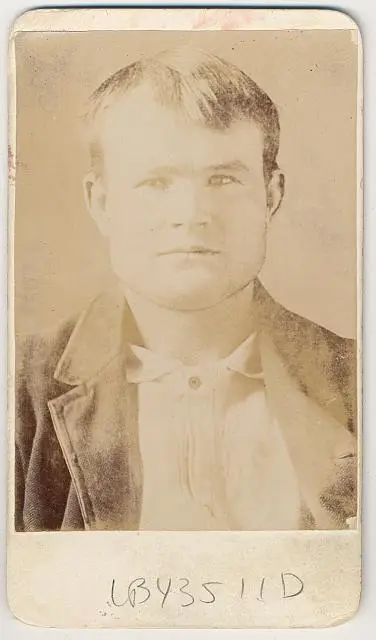
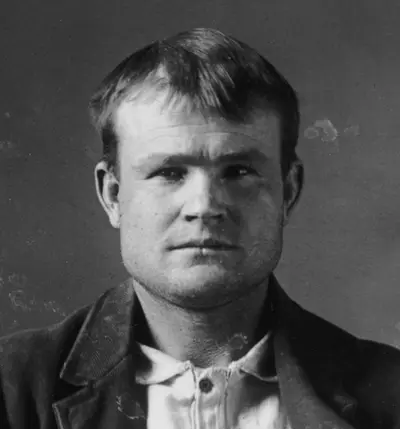
His first known bank robbery was the San Miguel Valley Bank in Telluride, Colorado, on 24 June 1889, which netted about $21,000; the robbers escaped to the remote Robbers Roost hideout in Utah. In 1894 he was arrested for horse theft at Lander, Wyoming, and served 18 months of a two-year sentence before being pardoned in January 1896.
After his release he gathered the loose group of outlaws who became the Wild Bunch. Its members included his close friend Elzy Lay, Harvey "Kid Curry" Logan, Ben Kilpatrick and, soon afterwards, Harry Longabaugh. They robbed a bank at Montpelier, Idaho, in August 1896 and a coal company payroll at Castle Gate, Utah, in April 1897. On 2 June 1899 they held up a Union Pacific train near Wilcox, Wyoming, which set off a huge manhunt. Between jobs they split up and met again at hideouts such as Hole-in-the-Wall and Robbers Roost.
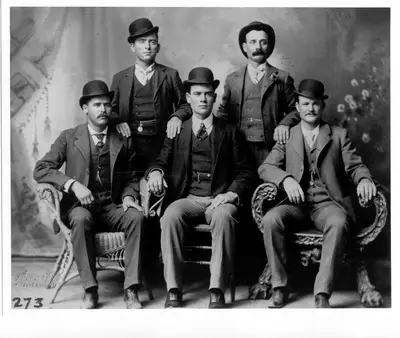
In 1899–1900 Cassidy explored an amnesty through Utah's governor, but on 29 August 1900 he, Longabaugh and others robbed another Union Pacific train near Tipton, Wyoming, which ended any chance of a deal. On 21 November 1900 five of the gang posed in Fort Worth, Texas, for a group portrait; the Pinkertons got hold of it and used it on wanted posters.
South America
On 20 February 1901 Cassidy, Longabaugh and Etta Place sailed from New York for Buenos Aires. They settled on a ranch near Cholila in Argentine Patagonia, but sold it in 1905 when the law seemed to be closing in, and eventually moved on to Bolivia. In Bolivia Cassidy worked for a time guarding payrolls at the Concordia tin mine.
Death
On 3 November 1908 two masked American bandits robbed a mining company's payroll near San Vicente in southern Bolivia. A few days later a small party of soldiers and local officials surrounded the two men at a boarding house in San Vicente. After a gunfight that lasted into the night, both men were found dead the next morning. The police report suggested that one had shot his fatally wounded companion and then himself. They were buried in San Vicente cemetery without being positively identified.
Legend versus history
- Did he die in Bolivia? Most historians accept that the two men at San Vicente were Cassidy and Longabaugh. But the identification is disputed. Accounts differ: some give his death as 7 November 1908, others "1909?", with other claimed fates. A forensic search of San Vicente cemetery in 1991 found no remains matching the families' DNA, and a 2017 dig in Nevada also failed.
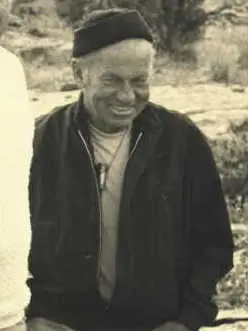
- Did he come home? His sister, Lula Parker Betenson, insisted that he visited the family in Circleville in the 1920s, and others claimed he died in Nevada or Washington state in the 1930s. None of these stories has been proved.
On screen
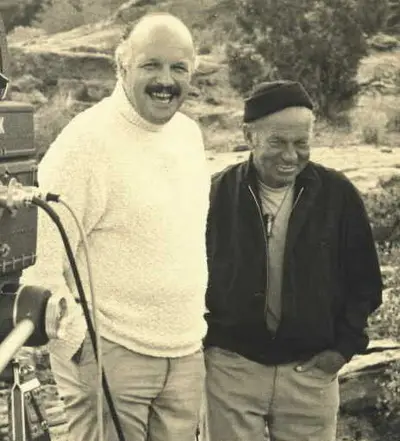
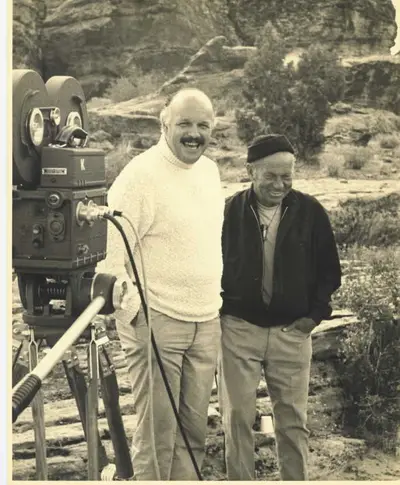
The 1969 film Butch Cassidy and the Sundance Kid, with Paul Newman as Cassidy, fixed the image of the charming, quick-talking outlaw in popular memory. It was followed by the prequel Butch and Sundance: The Early Days (1979).
Key facts
- Born: 13 April 1866, Beaver, Utah Territory, US
- Died: probably 7 November 1908, San Vicente, Bolivia (disputed)
- Birth name: Robert LeRoy Parker
- Gang: the Wild Bunch
- Known for: bank and train robberies, 1889–1901; flight to South America
- Born 13 April 1866, Beaver, Utah (Wikipedia, Britannica)
- Death: 7 November 1908 in Bolivia per Wikipedia; Britannica gives '1909?' and lists other claimed fates
- Took his alias from the older outlaw Mike Cassidy (Britannica)
- The Fort Worth Five group portrait of Wild Bunch members was taken at John Swartz's studio in Fort Worth on 21 November 1900 (Pinkerton company history; HistoryNet; fort-worth-five.com)
See also
Questions and answers
What happened at San Vicente?
On 4 November 1908 two masked Americans robbed a mining company's payroll courier in southern Bolivia. Three days later Bolivian authorities cornered two Americans in a rented house at San Vicente. The pair shot a Bolivian soldier dead, and after a short gunfight the mayor heard screams and then two single shots from inside. In the morning both men were found dead. After an inquest they were buried in an unmarked grave without ever being positively identified.
Sources: The Mysterious Deaths of Butch Cassidy and the Sundance Kid, History.com, 13 April 2016 (accessed 27 October 2026)
Is it proven that Butch Cassidy died in Bolivia?
No. The men killed at San Vicente were never identified by anyone who knew Cassidy, and in 1991 a grave thought to be theirs turned out to hold someone else. Most historians still think the two men were Cassidy and the Sundance Kid. The usual date is November 1908, from the Bolivian inquest; some reference works give 1909.
Sources: The Mysterious Deaths of Butch Cassidy and the Sundance Kid, History.com, 13 April 2016 (accessed 27 October 2026) · Butch Cassidy | Biography, Encyclopaedia Britannica (accessed 27 October 2026)
Did Butch Cassidy come back to the United States?
That's a family claim, not a proven fact. His sister Lula Parker Betenson wrote in 1975 that he visited the family in Utah in 1925 and lived on under another name until 1937, and other stories place him in Uruguay or elsewhere in the Americas. None of it has been proven.
Sources: The Mysterious Deaths of Butch Cassidy and the Sundance Kid, History.com, 13 April 2016 (accessed 27 October 2026) · Butch Cassidy | Biography, Encyclopaedia Britannica (accessed 27 October 2026)
How accurate is the ending of Butch Cassidy and the Sundance Kid?
Not very. The 1969 film sends the pair out in a blaze of glory into a hail of Bolivian bullets. The record from San Vicente suggests a quieter end: after a short gunfight, the two men seem to have died inside the house, probably with one shooting his wounded partner and then himself. And the bodies were never confirmed as theirs.
Sources: The Mysterious Deaths of Butch Cassidy and the Sundance Kid, History.com, 13 April 2016 (accessed 27 October 2026)
Gallery 7

In the films 3


Sources
- Butch Cassidy - Wikipedia en.wikipedia.org
- Wikidata: Q313574 wikidata.org
- Butch Cassidy - Britannica britannica.com
- Wikimedia Commons: Butch Cassidy with bowler hat.jpg commons.wikimedia.org
- The fort worth five the iconic photo that ended the wild wests most notorious gang - pinkerton.com pinkerton.com
- When the swartz brothers shot texas - historynet.com historynet.com
- fort-worth-five.com fort-worth-five.com