
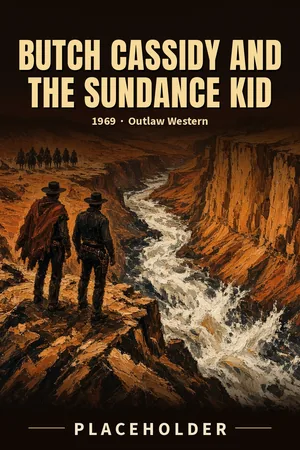

True Grit Rating: Butch Cassidy and the Sundance Kid
Loading the ticket…
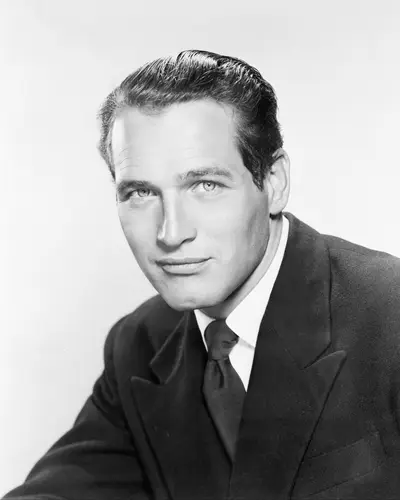
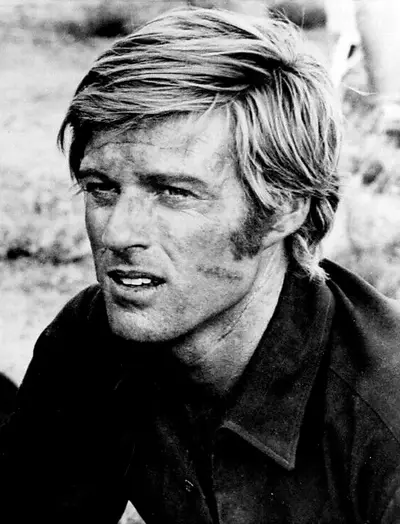
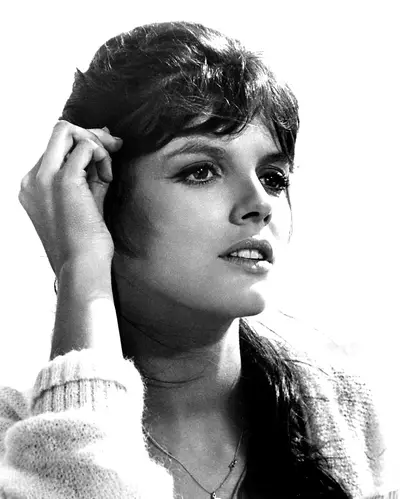
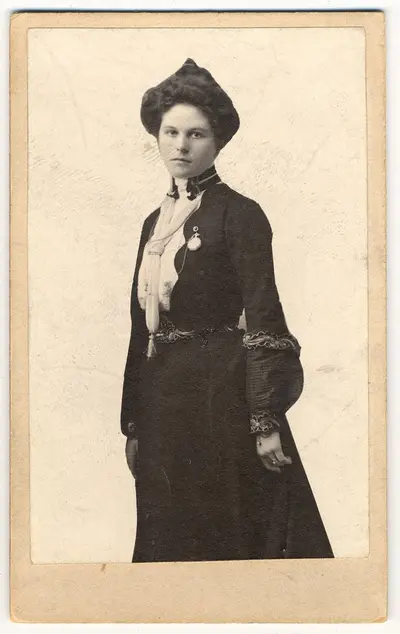
Butch Cassidy and the Sundance Kid is a 1969 American Western buddy film directed by George Roy Hill from an original screenplay by William Goldman. Loosely based on fact, it follows the outlaws Robert LeRoy Parker, known as Butch Cassidy (Paul Newman), and Harry Longabaugh, the Sundance Kid (Robert Redford), as they flee a relentless posse and escape to Bolivia with Sundance's lover, Etta Place (Katharine Ross). It opened to lukewarm reviews but became the top-grossing film released in 1969, and it is now one of the best-loved Westerns. The Library of Congress added it to the National Film Registry in 2003.
Plot
In Wyoming in 1898, the talkative, likeable Butch leads the Hole-in-the-Wall Gang, and his closest friend is the quiet, deadly Sundance. After seeing off a challenge to his leadership, Butch has the gang rob the same Union Pacific train on two runs. The second robbery goes wrong when a special train arrives carrying a hand-picked squad of lawmen, hired by the railway boss E. H. Harriman to hunt the pair down. The posse follows them relentlessly until Butch and Sundance escape by jumping from a cliff into a river.
With Etta, they flee to Bolivia, where they become successful bank robbers. They try going straight as payroll guards for a mining company, but when bandits ambush them, Butch shoots a man for the first time in his life. Etta goes home rather than watch them die. Cornered in a small town by police and Bolivian soldiers, the wounded outlaws charge out of their hiding place, guns blazing, and the film ends on a freeze frame as the shooting begins.
History and legend
Goldman spent about eight years researching the real outlaws on and off, but chose to write an original screenplay rather than a novel because he did not want to be bound by the facts. What drew him was the second act of their story: in his words, the two men "ran to South America and lived there for eight years", where they became more legendary than they had been at home.
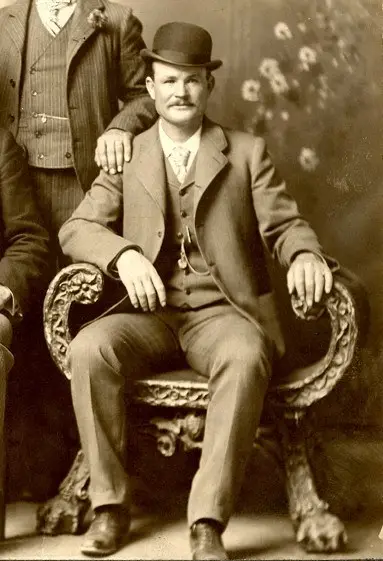
The film keeps the outline of the history: the train robberies, the Pinkerton and railway pursuit, and the flight to South America. Its ending matches the traditional account of their deaths in a gunfight at San Vicente, Bolivia, in November 1908. That account is not certain, though, and the wiki's pages on Butch Cassidy and the Sundance Kid cover the doubts about how and whether the two men died there.
Production
Goldman later said that only one studio would buy his first script, and only if the heroes did not run away to South America; he was told that "John Wayne don't run away." After small changes, however, every studio wanted it. Jack Lemmon turned down the role of Sundance, and Steve McQueen and Warren Beatty were also considered before Redford took it.
The film was shot in Utah, including the ghost town of Grafton, Zion National Park and St. George, as well as in Colorado and in Mexico, where locations included Taxco and Cuernavaca. Burt Bacharach and Hal David wrote the song "Raindrops Keep Fallin' on My Head", sung by B. J. Thomas, for the film's bicycle sequence. Some, including Redford, thought it was wrong for a Western, but Hill insisted on keeping it. Redford later admitted he had been wrong, as the song became a huge hit.
Reception
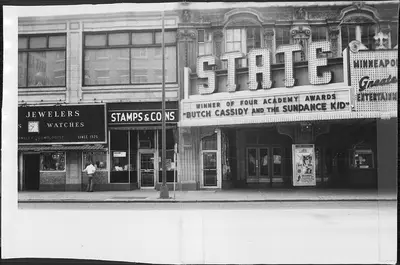
The film premiered in New Haven, Connecticut, on 23 September 1969 and opened in New York the next day. Many early reviews were cool. Vincent Canby of The New York Times found it "very funny in a strictly contemporary way" but felt a "gnawing emptiness" at its heart, and Roger Ebert gave it two and a half stars out of four. Audiences disagreed: it became the number one film in the US and Canada and eventually grossed more than $100 million in the US. It won four Academy Awards.
Its standing has grown since. The American Film Institute ranked it seventh among Westerns in 2008, and the Writers Guild of America placed Goldman's script 11th among its 101 greatest screenplays. Redford named his Utah ski resort Sundance after the role, and the name later passed to the Sundance Institute and the Sundance Film Festival.
Key facts
- Director: George Roy Hill
- Screenplay: William Goldman
- Music: Burt Bacharach
- Premiere: 23 September 1969, New Haven, Connecticut
- Locations: Utah, Colorado and Mexico
- National Film Registry: 2003
- Directed by George Roy Hill
- Released 1969
- Written by William Goldman
Cast
See also
If you liked this
Picked from this wiki's own links: same film series, same director, same lead actor.

Frontier folk
This film is listed on: Outlaws, gangs and robbers · Posses (all Frontier folk)
Gallery 7







True Grit RatingWhat's this?Woke: None found★★★★★SVLIMDb ★8.0
True Grit score: 73/100, Silver
How the score is worked out:
- Start100
- Revisionist: yes−15
- History rewritten: yes−15
- Traditional values: 1 star+3
- True Grit score73 · Silver
Classic Western checks
2 of 5 yes · Mixed
- Called “revisionist”YesYes: described as a revisionist Western by two articles; one review questions the label.[1][2][3]
- Settlers or cavalry as villainsNoNo: the villains are individuals, a gang, a boss, a posse or a cattle baron, not settlers or soldiers as a group.[4]
- Faith shown negativelyNoThe plot shows no clergy or faith portrayed negatively.[5]
- History rewrittenYesYes: under the true-story claim (“most of what follows is true”), the ending and other beats take liberties with the record (Hollywood charge vs. a small … [6][7][8]
more
Yes: under the true-story claim (“most of what follows is true”), the ending and other beats take liberties with the record (Hollywood charge vs. a small patrol; the dead men never positively identified). - A people shown as villainsNoNo: the plot source pins the villainy on named individuals, a gang or a specific band, not on a people as a whole.[4]
Woke content (modern messaging)
None found0 of 8 items found so far
Show all 8 (3 not found · 5 not known)
Unless noted: Unknown.
- Characters recast for representationNot known
- Gender roles reversed or critiquedNot known
- Present-day political languageNot known
- Allegory for current politicsNot foundReleased in 1969, before the 21st-century debates this item covers, so it cannot be an allegory of them.[5]
- Western civilisation framed as inherently guiltyNot known
- Environmental activismNot foundNo: no source raises an environmental message (5 Nov 2026).[5]
- Source material changed for messagingNot foundAn original screenplay (no novel, earlier film or established characters), so there is no source to change.[5]
- LGBT or gender-identity themesNot known
Traditional values
★★★★★1/5[9]
From one parents' guide's positive messages and role models ratings: positive messages very little (1) and positive role models very little (1); average 1 …
Content guide
- SSex & nudityModerateModerate sex, romance and nudity (3/5 in one parents' guide).[9]
- Sexual violence or threatNone[10][11]
- VViolenceModerateModerate violence and scariness (3/5 in one parents' guide).[9]
- LLanguageModerateModerate language (3/5 in one parents' guide).[9]
UK classification advice lists no sex or nudity issues.
Certificates: BBFC PG MPA PG FSK FSK 16
NoneMildModerateStrongNot known
Audience
★ 8.0/10 from viewers on IMDb (240k votes)No deduction (5.0 and up).
Sources
- TCM, “Spotlight: Revisionist Westerns”
- Book and Film Globe, “William Goldman's Western Cowards”
- The Guardian (23 Sep 2019)
- Once Upon a Time in a Western: Butch Cassidy and the Sundance Kid
- Wikipedia: Butch Cassidy and the Sundance Kid (plot)
- HISTORY, Christopher Klein (2016, updated 2025) (checked 17 October 2026)
- The Seattle Times, Tyler Bridges (23 Mar 2007) (checked 17 October 2026)
- BBC News, Andres Schipani (7 Nov 2008)
- Common Sense Media: Butch Cassidy and the Sundance Kid
- bbfc.co.uk/release/butch-cassidy-and-the-sundance-kid-q29sbgvjdglvbjpwwc0ynzuzndm
- wikidata.org/wiki/Q232000
Information courtesy of IMDb (https://www.imdb.com). IMDb rating as of 13 October 2026.
Checked 17 October 2026 · Reviewed by Frontier Editor
Member reviews
What members think. Member reviews never change the True Grit score. The True Grit score is worked out by the editors from sources.
Sources
- Butch Cassidy and the Sundance Kid - Wikipedia en.wikipedia.org
- Wikidata: Q232000 wikidata.org
- Butch Cassidy and the Sundance Kid - Britannica britannica.com
- IMDb Non-Commercial Datasets developer.imdb.com
- Butch cassidy and the sundance kid q29sbgvjdglvbjpwwc0ynzuzndm - bbfc.co.uk bbfc.co.uk
- Metacritic (score via Wikidata) metacritic.com
- Rotten Tomatoes (score via Wikidata) rottentomatoes.com
- Wikimedia Commons: 1974 - Nineteenth Street Theater Ad - 28 May MC - Allentown PA.jpg commons.wikimedia.org
- Wikimedia Commons: Minneapolis 1970 - State Theatre.jpg commons.wikimedia.org
- Wikimedia Commons: William R Edmondson (1970).jpg commons.wikimedia.org
- Wikimedia Commons: William R Edmondson (right) and an unknown man (cropped).jpg commons.wikimedia.org
- Wikimedia Commons: William R Edmondson (right) and an unknown man.jpg commons.wikimedia.org
- Wikimedia Commons: Butch Cassidy with bowler hat.jpg commons.wikimedia.org
- Wikimedia Commons: Etta Place, three-quarter length portrait LCCN2006680236.jpg commons.wikimedia.org
- Wikimedia Commons: George S. Curry.jpg commons.wikimedia.org
