
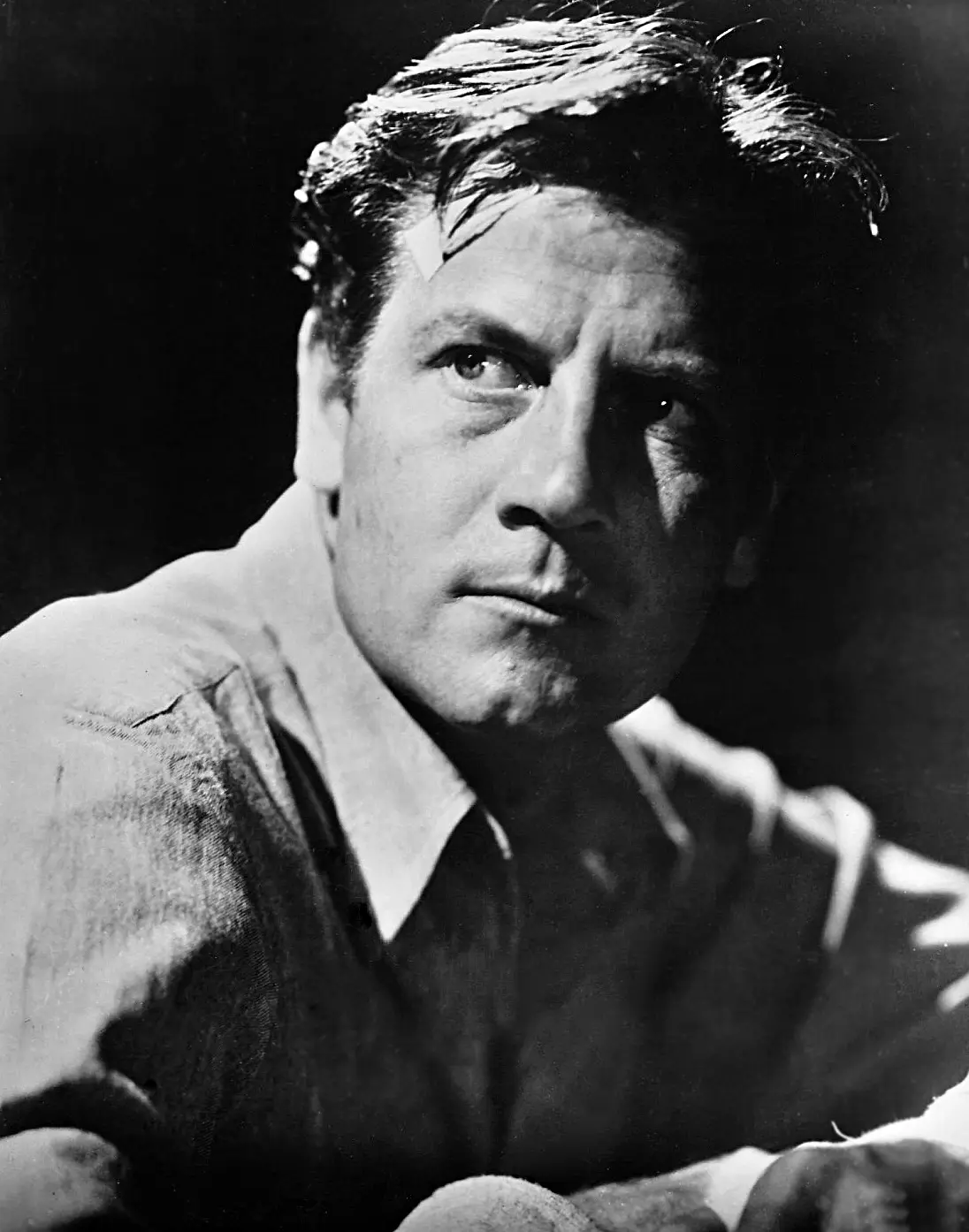

Joel Albert McCrea (1905–1990) was an American leading man whose career spanned almost five decades and took in comedy, drama, romance and thrillers, but who became best known for Westerns. He appeared in more than 100 films between 1927 and 1976 and starred in over 80. After The Virginian (1946) he worked almost exclusively in Westerns, and his screen persona, a dependable, even-tempered man with a resonant American twang, made him one of the genre's most trusted heroes. His last major film, Sam Peckinpah's Ride the High Country (1962), opposite Randolph Scott, is one of the great elegies for the Old West.
Early life
McCrea was born on 5 November 1905 in South Pasadena, California, the son of a utility company executive. As a boy he delivered the Los Angeles Times to Cecil B. DeMille and others in the film business, watched D. W. Griffith filming Intolerance and worked as an extra in a serial. In high school he held horses and doubled for the cowboy stars William S. Hart and Tom Mix. He loved horses from an early age, and he was later considered one of the best riders in Western films. In 1928, the year he graduated from Pomona College, he met the real Wyatt Earp in Hollywood, a man he would play on screen 27 years later.
Leading man
McCrea worked as an extra, stuntman and bit player before signing with MGM in 1928. The year of his first leading role is given differently: The Silver Horde is dated to 1929 in some accounts and to 1930 in others. He moved to RKO in 1930 and established himself as a handsome, versatile star of dramas and comedies, among them The Most Dangerous Game (1932) with Fay Wray. In 1933 he married the actress Frances Dee; they stayed married until his death.
Later in the 1930s he starred in two large-scale Westerns: Wells Fargo (1937), with Dee, and Cecil B. DeMille's Union Pacific (1939), the epic of the building of the transcontinental railroad, in which he played Captain Jeff Butler opposite Barbara Stanwyck. The early 1940s were the high point of his early career, with Alfred Hitchcock's Foreign Correspondent (1940), Preston Sturges's comedies Sullivan's Travels (1941) and The Palm Beach Story (1942), and George Stevens's The More the Merrier (1943). He also made two Westerns for William Wellman, The Great Man's Lady (1942) and Buffalo Bill (1944).
The Western years
After the success of The Virginian in 1946, McCrea made Westerns exclusively for the rest of his career, with only two exceptions. "As I got older I was better suited to do Westerns," he explained in 1978. "The minute I got a horse and a hat and a pair of boots on, I felt easier. I didn't feel like I was an actor anymore." His Westerns of this period include Colorado Territory (1949), The Outriders (1950) and Stranger on Horseback (1955). In Jacques Tourneur's Wichita (1955) he played Wyatt Earp. In the early 1950s he also starred as the Texas Ranger Jace Pearson on the radio series Tales of the Texas Rangers, and in 1959 he and his son Jody starred in the NBC television series Wichita Town. He turned down the lead in Rawhide.
Ride the High Country
In Ride the High Country McCrea played Steve Judd, an ageing former lawman hired to guard a gold shipment, and Scott played Gil Westrum, another former lawman. The film's nostalgic sense of the passing of the Old West made it a fitting farewell for both men. After it McCrea made only a handful of films, including The Young Rounders (1966), Cry Blood, Apache (1970) with Jody, and his final film, Mustang Country (1976).
Rancher
McCrea once listed his occupation as "rancher" and his hobby as "acting". From 1933 he bought land in Ventura County, California, building up a ranch of some 3,000 acres, and by the end of the 1940s he was a multi-millionaire, as much from property as from films. He credited Will Rogers with the advice to save half of what he earned. He was inducted into the Hall of Great Western Performers at the National Cowboy & Western Heritage Museum in 1969. He died in Woodland Hills, California, on 20 October 1990, which was also his 57th wedding anniversary.
Key facts
- Born: 5 November 1905, South Pasadena, California, US
- Died: 20 October 1990, Woodland Hills, California, US
- Spouse: Frances Dee (married 1933)
- Westerns only: from 1946 until retirement in 1976, with two exceptions
- Western roles: Captain Jeff Butler, Wyatt Earp, Steve Judd
- Last film: Mustang Country (1976)
- Occupations (Wikidata): actor, film actor, television actor
- Born 1905-11-05
- Died 1990-10-20
See also
Filmography
As actor 12
- 1937Wells Fargo
- 1939Union Pacific
- 1944Buffalo Bill
- 1947Ramrod
- 1948Four Faces West
- 1949Colorado Territory
- 1950Stars in My Crown
- 1950The Outriders
- 1954Black Horse Canyon
- 1954Border River
- 1955Wichita
- 1962Ride the High Country
Television 1
- 1959Wichita Town main cast
Gallery 8
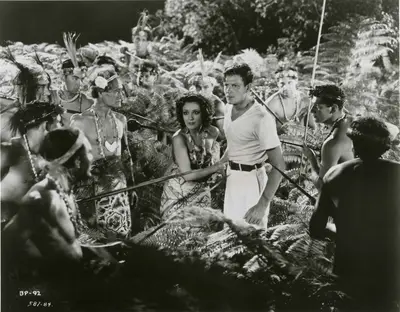

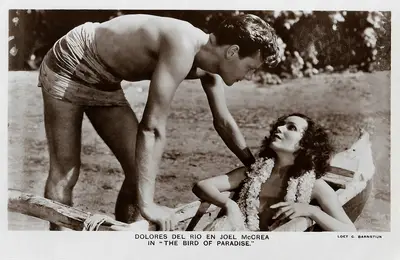

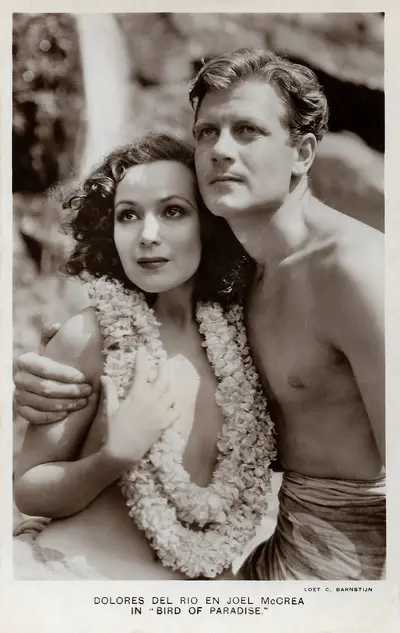





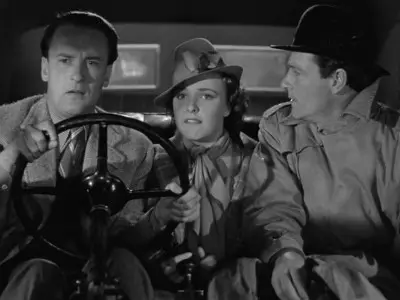

In the films 3
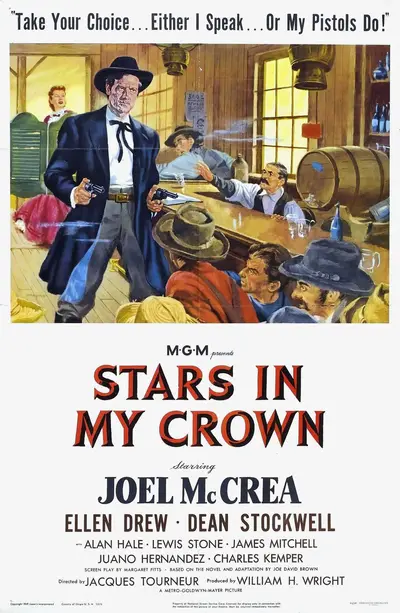

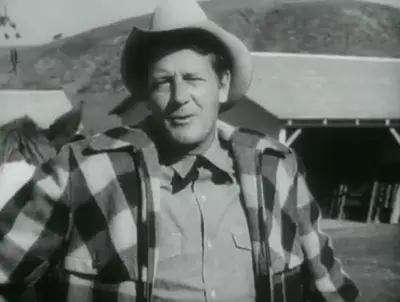

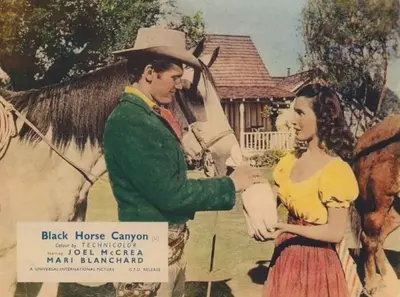

Sources
- Joel McCrea - Wikipedia en.wikipedia.org
- Wikidata: Q436784 wikidata.org
- Wikimedia Commons: Joel McCrea - publicity.JPG commons.wikimedia.org
- Joel McCrea | Britannica britannica.com