
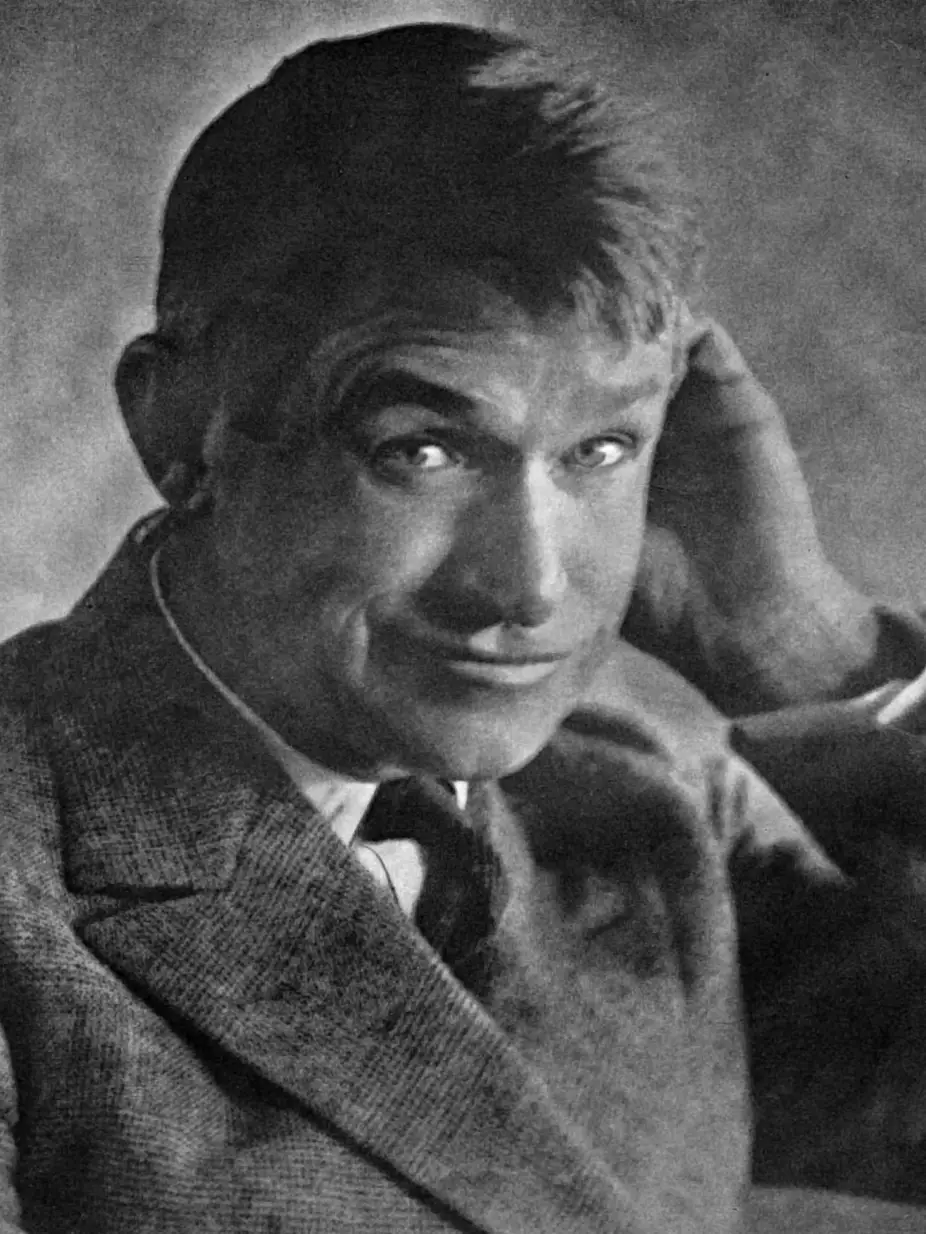

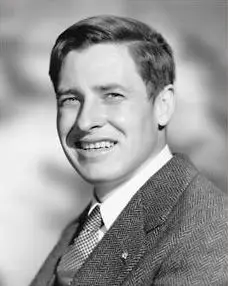
Will Rogers (1879–1935) was an American cowboy, trick roper, actor, humorist and newspaper columnist, born a citizen of the Cherokee Nation in Indian Territory. Starting out spinning ropes in Wild West shows, he became a vaudeville and Ziegfeld Follies star, one of the most popular film actors of the early 1930s, a radio broadcaster and the writer of a column read across the nation. His dry, good-humoured comments on the news of the day made him perhaps the best-loved American of his time, and his death in an air crash in Alaska in 1935 brought national mourning. He is remembered in Oklahoma as "Oklahoma's Favorite Son".
Early life
William Penn Adair Rogers was born on 4 November 1879 on his family's ranch near Oologah, in the Cooweescoowee District of the Cherokee Nation, in what is now Oklahoma. He was named after the Cherokee leader Colonel William Penn Adair. His father, Clement Vann Rogers, and his mother, Mary America Schrimsher Rogers, were both part Cherokee; Clem Rogers was a successful rancher, a Cherokee judge and later a banker and tribal politician in Claremore. Will was the youngest of eight children and the only boy to survive to adulthood, and his mother died when he was ten.
He was a lively, bright boy who loved riding and roping but disliked the classroom. He attended boarding schools in the territory, including Willie Halsell College at Vinita, and spent more than a year at the Kemper Military School in Missouri before leaving school at seventeen. He worked as a cowboy on ranches in the Texas Panhandle, then returned to run cattle on the family ranch under his own Dog Iron brand, though he was more interested in roping and riding contests.
Wild West shows and vaudeville
At the end of 1901 Rogers and a friend set off to try their luck as ranchers in Argentina, arriving in 1902. They lost their money, and Rogers worked his passage on a cattle boat to South Africa, where he joined Texas Jack's Wild West show as a trick roper and rider billed as "the Cherokee Kid". Texas Jack gave him the idea for a stage act with his pony and a letter of introduction to the Wirth Brothers Circus in Australia, where he went next. He returned to the United States in 1904, performed at the St. Louis World's Fair and with Zack Mulhall's Wild West cowboys, and began to work in vaudeville.
On 27 April 1905, at Madison Square Garden in New York, a steer broke out of the arena and began to climb into the stands; Rogers roped it, and the newspapers made him famous overnight. His vaudeville roping act toured the United States and Europe. He began to talk to the audience while he roped, and his remarks proved even more popular than his tricks. He joined Florenz Ziegfeld's Midnight Frolic in 1915 and the Ziegfeld Follies from 1916, opening his act with the famous line that all he knew was what he read in the papers.
Films, radio and the press
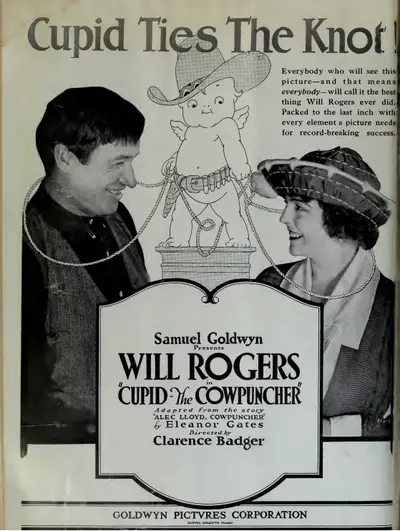
Rogers made his first film, Laughing Bill Hyde, for Samuel Goldwyn in 1918, and in 1919 moved his family to California to be near the film industry. He made 71 films in all, 50 of them silent. They include the Western comedy Cupid the Cowpuncher (1920), in which he plays a matchmaking ranch overseer. In the sound era he became one of Hollywood's top stars, playing homespun, kindly Americans in films such as State Fair (1933), David Harum (1934) and In Old Kentucky (1935). His favourite director was John Ford, who directed him three times, in Doctor Bull (1933), Judge Priest (1934) and Steamboat Round the Bend (1935). Joel McCrea was among the young actors who worked with him.
From 1922 he wrote a weekly newspaper column, and from 1926 a short daily one as well; between them they appeared in more than five hundred newspapers, and he wrote more than 4,000 columns in all. From 1929 to 1935 he made a weekly Sunday evening radio programme for the Gulf Oil Company, which ranked among the most popular in the country. He travelled the world three times and wrote about it, and his quips about politicians of both parties were repeated everywhere. He said that his humour aimed to tell the truth and that he never meant to hurt anyone with his "little gags".
Family and character
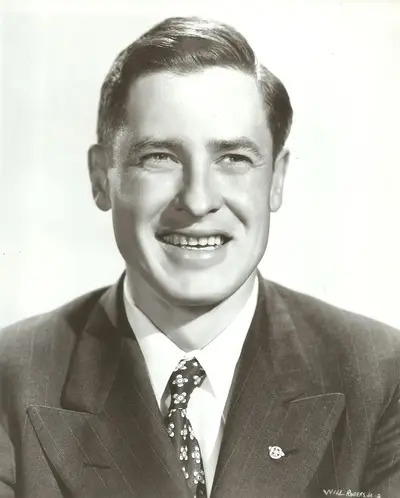
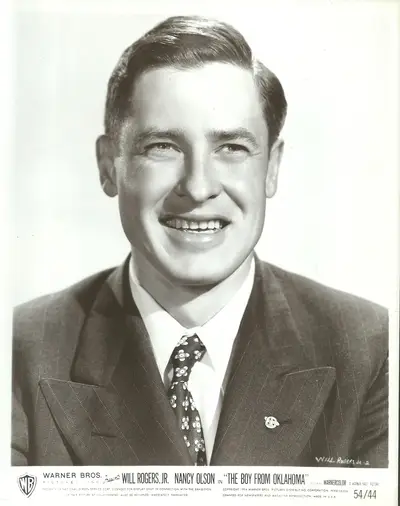
In 1908, after a long courtship, Rogers married Betty Blake of Rogers, Arkansas, calling it "the star performance of my life". They had four children, Will Jr., Mary, Jim and Fred; Fred, named after Rogers' close friend the actor Fred Stone, died of diphtheria in 1922, aged two. The family later made their home on a ranch at Pacific Palisades, California, with stables and a polo field.
Rogers used his fame generously. He was known as a philanthropist, and in the depths of the Depression, angered that the hungry were not being fed, he made a cross-country fundraising tour for the Red Cross. He was a strong supporter of the new aviation industry and a friend of Charles Lindbergh, and he flew often as a passenger, becoming the first civilian to fly from coast to coast with the pilots of the air mail.
Death and legacy
In August 1935 Rogers joined the aviator Wiley Post on a flying trip through Alaska. On 15 August, about 20 miles south-west of Barrow (now Utqiaġvik), their plane's engine failed on take-off from a lagoon and both men were killed. The nation went into mourning. Rogers was buried at Forest Lawn in Glendale, California, and in 1944 his body was moved to the family tomb at the Will Rogers Memorial Museum in Claremore, Oklahoma, on land he had bought for his retirement.
He is especially remembered for the line he suggested for his own epitaph: "I joked about every prominent man of my time, but I never met a man I didn't like." He encouraged younger performers, among them Gene Autry, whom he is said to have heard singing in a railway telegraph office at Chelsea, Oklahoma; when Republic Pictures renamed the young Leonard Slye in 1938, it borrowed Will's surname to make him Roy Rogers. A statue of Rogers stands in the US Capitol, and his California ranch became Will Rogers State Historic Park; its house and stables were destroyed in the Palisades Fire of January 2025.
Legend and history
- The telegraph office. The story that Rogers came into the Chelsea telegraph office one night, heard Gene Autry singing to his guitar and urged him to sing professionally is told in most accounts of Autry's life. Some historians treat it as a legend, and the details vary.
- Argentina, 1901 or 1902? Rogers and his friend Dick Parris left home at the end of 1901 and reached Argentina in May 1902, so accounts give either year for the trip.
Key facts
- Born: 4 November 1879, near Oologah, Cherokee Nation, Indian Territory (now Oklahoma), US
- Died: 15 August 1935, near Barrow (now Utqiaġvik), Alaska, US
- Known for: trick roping; the Ziegfeld Follies; homespun humour; films, radio and newspaper columns
- Films: 71 (50 silent and 21 sound)
- Spouse: Betty Blake (married 1908)
- Buried: Will Rogers Memorial Museum, Claremore, Oklahoma
- Honours: statue in National Statuary Hall; National Aviation Hall of Fame
- Occupations (Wikidata): politician, journalist, stage actor, film actor
- Born 1879-11-04
- Died 1935-08-15
See also
Filmography
As actor 1
Appears in 4




Sources
- Will Rogers - Wikipedia en.wikipedia.org
- Wikidata: Q457840 wikidata.org
- Wikimedia Commons: Will Rogers 1922.jpg commons.wikimedia.org