
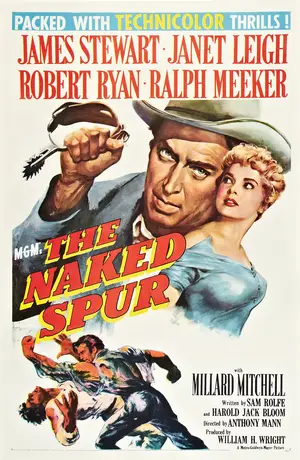
True Grit Rating: The Naked Spur
Loading the ticket…
The Naked Spur is a 1953 American Western directed by Anthony Mann and starring James Stewart, Janet Leigh, Robert Ryan, Ralph Meeker and Millard Mitchell. Stewart plays a bounty hunter who captures a wanted killer and then has to share the journey, and possibly the reward, with two strangers he cannot trust. Sam Rolfe and Harold Jack Bloom wrote the screenplay, which was nominated for the Academy Award, an unusual honour for a Western. The film was added to the US National Film Registry in 1997.
Plot
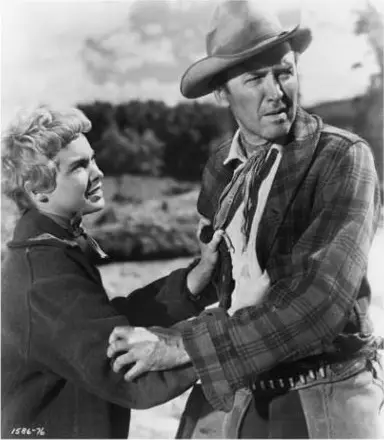
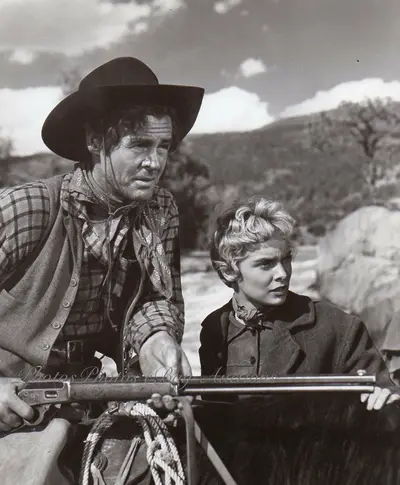
In the Colorado Rockies in 1868, Howard Kemp (Stewart) is hunting Ben Vandergroat (Ryan), wanted for killing a marshal in Abilene, Kansas. He hires an old prospector, Jesse Tate (Mitchell), who assumes Kemp is a sheriff, and they are joined by Roy Anderson (Meeker), a cavalryman discharged as "morally unstable". Together they capture Vandergroat and his young companion, Lina Patch (Leigh), the daughter of an old friend of his.
Vandergroat reveals that Kemp is no lawman and that the poster offers $5,000 for him "dead or alive". Tate and Anderson want their shares. On the long trail out, Vandergroat works constantly to turn his captors against one another. After a fight with Blackfoot warriors who are pursuing Anderson, Kemp is wounded, and in his delirium Vandergroat learns his secret: Kemp's fiancée sold his ranch while he was away at the Civil War and left with another man, and he needs the reward to buy it back. Kemp and Lina grow closer.
Vandergroat finally tempts Tate with talk of a gold mine, escapes with him and Lina, and then kills Tate in cold blood. Lina at last sees him for what he is. In the climax at a flooded river, Kemp climbs a cliff, using a spur as a climbing hook, and Anderson shoots Vandergroat. Anderson is then killed trying to recover the body from the river. Kemp drags the corpse ashore, swearing he will still take it in for the money, but Lina says she will go with him whatever he decides. He breaks down, then begins to dig a grave for Vandergroat, and the two set out for California.
Production
The film was the third of Mann and Stewart's five Westerns together, after Winchester '73 (1950) and Bend of the River (1952), and the third of their eight films overall. It has only five speaking parts. Ryan, best known for villains and hard-boiled policemen, played Vandergroat. Mitchell died of lung cancer, aged 50, not long after making the film; it was his second-to-last picture.
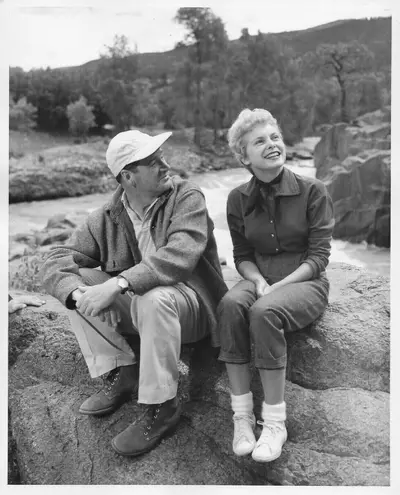
Instead of desert, Mann chose mountains. The film was shot in the San Juan Mountains and around Durango in Colorado and at Lone Pine, California, between late May and June 1952. In a 1967 interview Mann said he never understood why almost all Westerns were shot in the desert, and that he wanted "to show the mountains, the waterfalls, the forested areas, the snowy summits". Bronisław Kaper wrote the score, which uses the song "Beautiful Dreamer" as a theme, and William C. Mellor was the cinematographer.
Reception
The film premiered at the start of February 1953, one of three Mann–Stewart films released that year with Thunder Bay and The Glenn Miller Story. MGM's records show it earned $2,423,000 in the US and Canada and $1,427,000 overseas, a profit for the studio of $1,081,000. Its success led to three more Stewart–Mann films, among them the Westerns The Far Country and The Man from Laramie.
Its reputation has grown since. Jonathan Rosenbaum called it "Mann's best and most elemental western", with "some of the most intense psychological warfare" in the director's work. Empire described it as "a masterpiece that's too easy to take for granted", and Leonard Maltin has called it "one of the best westerns ever made".
A note on the sources
Accounts differ: Anderson is described in one place as a cavalryman discharged as "morally unstable" and in another as "a disgraced Army officer". This page follows the plot description.
Key facts
- Director: Anthony Mann
- Screenplay: Sam Rolfe and Harold Jack Bloom (Academy Award nomination)
- Music: Bronisław Kaper
- Cinematography: William C. Mellor
- Studio: MGM
- Locations: San Juan Mountains and Durango, Colorado; Lone Pine, California
- National Film Registry: 1997
- Directed by Anthony Mann
- Released 1953
Cast
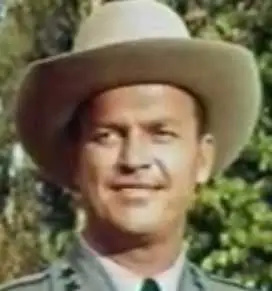
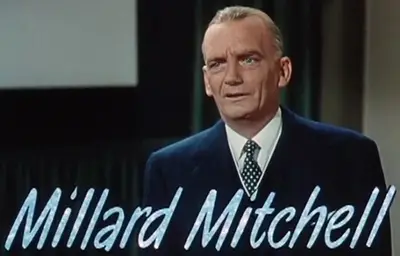
See also
If you liked this
Picked from this wiki's own links: same film series, same director, same lead actor.


Frontier folk
This film is listed on: Bounty hunters · Renegade raiding bands (by tribe) · Blacksmiths, railroad workers and prospectors · Blackfoot (Blackfeet) (all Frontier folk)
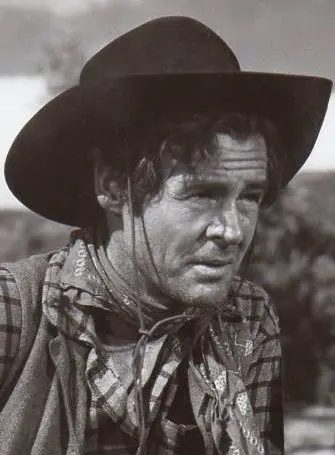
Gallery 4



True Grit RatingWhat's this?Woke: None foundSVLIMDb ★7.3Partly checked
True Grit score: 99/100, Gold Partly checked
How the score is worked out:
- Start100
- Diamond needs all five checks; not met (raw score under 109): 100 → 99
- Presumed (Hays Code, 1934–1967): violence, language presumed no, counted as checked0
- True Grit score99 · Gold
Classic Western checks
1 of 5 yes · Mostly classic
- Called “revisionist”YesYes (R6): AllMovie lists the film under its "Psychological Western" sub-genre, which this wiki counts as revisionist (owner ruling, 11 Nov 2026). [1]
more
Yes (R6): AllMovie lists the film under its "Psychological Western" sub-genre, which this wiki counts as revisionist (owner ruling, 11 Nov 2026). AllMovie dates it 1952; same film (Anthony Mann). - Settlers or cavalry as villainsNoThe villain is the outlaw Ben Vandergroat, wanted for killing a marshal in Abilene, who tries to turn his captors against each other and later kills the … [2]
more
The villain is the outlaw Ben Vandergroat, wanted for killing a marshal in Abilene, who tries to turn his captors against each other and later kills the prospector Tate. A band of Blackfoot pursues the party because one of its members, the recently discharged cavalryman Roy Anderson, raped the chief's daughter. - Faith shown negativelyNoThe plot shows no clergy or faith portrayed negatively.[2]
- History rewrittenNoFiction with invented characters; it portrays no real historical events or people, so nothing documented is rewritten.[2]
- A people shown as villainsNoNo: the plot source pins the villainy on named individuals or a specific band, not on a people as a whole.[3]
Woke content (modern messaging)
None found0 of 8 items found so far
Show all 8 (4 not found · 4 not known)
Unless noted: Unknown.
- Characters recast for representationNot foundAn original story with invented characters (no source work and no real people), so no established or historical figure could be recast.[2]
- Gender roles reversed or critiquedNot known
- Present-day political languageNot known
- Allegory for current politicsNot foundReleased in 1953, before the 21st-century debates this item covers, so it cannot be an allegory of them.[2]
- Western civilisation framed as inherently guiltyNot known
- Environmental activismNot foundNo: no source raises an environmental message (5 Nov 2026).[2]
- Source material changed for messagingNot foundAn original screenplay (no novel, earlier film or established characters), so there is no source to change.[2]
- LGBT or gender-identity themesNot known
Content guide
Presumed no (Hays Code)
UK classification advice (12, 2023): Condescending and sexist attitudes are demonstrated towards a female character, but this is in the context of the …
Certificates: BBFC 12 FSK FSK 16
NoneMildModerateStrongNot known
Audience
★ 7.3/10 from viewers on IMDb (14k votes)No deduction (5.0 and up).
Sources
Information courtesy of IMDb (https://www.imdb.com). IMDb rating as of 13 October 2026.
Checked 17 October 2026 · Reviewed by Frontier Editor
Partly checked: 1 check not known. Not known items are left out of the score.
Member reviews
What members think. Member reviews never change the True Grit score. The True Grit score is worked out by the editors from sources.
Sources
- The Naked Spur - Wikipedia en.wikipedia.org
- Wikidata: Q1275343 wikidata.org
- Wikimedia Commons: The Naked Spur (1952 poster).jpg commons.wikimedia.org
- Wikimedia Commons: Nakedspur trailer 3.jpg commons.wikimedia.org
- The Naked Spur - Britannica britannica.com
- IMDb Non-Commercial Datasets developer.imdb.com
- The naked spur q29sbgvjdglvbjpwwc0ynju2nde - bbfc.co.uk bbfc.co.uk
- Rotten Tomatoes (score via Wikidata) rottentomatoes.com
- Wikimedia Commons: Anthony Mann and Janet Leigh relax between scenes of MGM%27s %27The Naked Spur%27, 1952.jpg commons.wikimedia.org
- Wikimedia Commons: Janet Leigh %26 James Stewart The Naked Spur Still.jpg commons.wikimedia.org
- Wikimedia Commons: Robert Ryan and Janet Leigh in Naked Spur.jpg commons.wikimedia.org
- Wikimedia Commons: Robert Ryan in Naked Spur.jpg commons.wikimedia.org
