
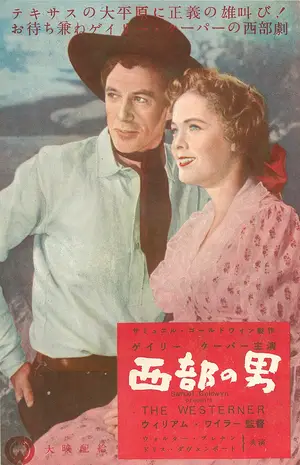

True Grit Rating: The Westerner
Loading the ticket…
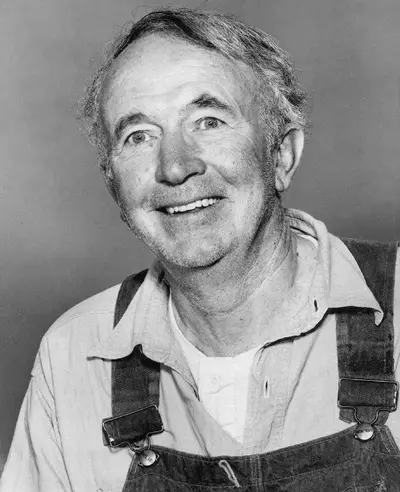
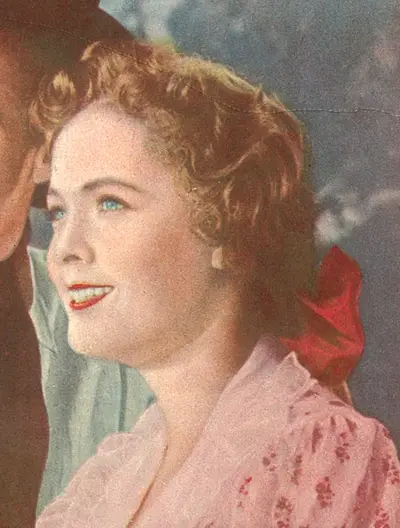
The Westerner is a 1940 American Western directed by William Wyler and produced by Samuel Goldwyn, starring Gary Cooper, Walter Brennan and Doris Davenport. Cooper plays Cole Harden, a drifter who befriends the self-appointed hanging judge Roy Bean of Vinegaroon, Texas, but turns against him to defend the homesteaders Bean is driving off the land. The film is best remembered for Brennan's performance as Bean, which won him a record third Academy Award for Best Supporting Actor. Niven Busch and Jo Swerling wrote the screenplay from a story by Stuart N. Lake, and the supporting cast includes Dana Andrews, Chill Wills and Forrest Tucker.
Plot
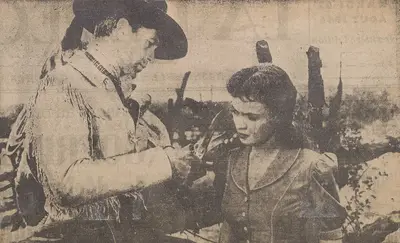
In 1882 Judge Roy Bean, "the only law west of the Pecos", holds court in his saloon in Vinegaroon and hangs anyone who crosses him or his cattlemen friends, including homesteaders who put up fences. Cole Harden is brought before him accused of stealing a horse. Facing the rope, Harden notices Bean's devotion to the English actress Lillie Langtry and claims he knows her and owns a lock of her hair. Bean suspends the sentence, and the two men become uneasy friends.
Harden then sides with the homesteaders, led by Caliphet Mathews and his daughter Jane Ellen. He tries to appeal to Bean's better nature and even saves him from a lynching, but after the farmers' crops are burned and Mathews is killed, Harden is sworn in as a deputy and takes out a warrant for Bean's arrest. When Langtry comes to perform in a nearby town, Bean buys every ticket and arrives alone in his Confederate uniform, only to find Harden waiting for him in the theatre. Harden mortally wounds him and carries him backstage, where Bean meets his idol before he dies. Two years later Harden and Jane Ellen, now married, have rebuilt the farm and watch new settlers arriving.
Production
Goldwyn bought a ten-page treatment about Roy Bean and hired Jo Swerling to turn it into a script, then brought in Niven Busch to help. Busch later recalled going to Cooper for advice whenever he was stuck, because Cooper was "such a fund of information about the West". Cooper himself was reluctant to take the part, fearing that Brennan's role would overshadow his. He agreed to finish his contract only "under protest". Cooper and Brennan appeared in eight films together, including Sergeant York (1941).
Reception
The New York Times felt the picture lacked a clear centre, saying Cooper had let "the most important role in the picture" pass to Brennan, though it praised Brennan highly. Brennan's Oscar was his third in the five years since the supporting actor award was created. The film was also nominated for Best Art Direction (James Basevi) and Best Original Story (Stuart N. Lake). In 2008 it was among the films nominated for the Western category of the American Film Institute's "10 Top 10" list.
Historical accuracy
The real Roy Bean did call himself "the Law West of the Pecos" and admired Lillie Langtry, but he was not shot down in a theatre. He died at Langtry, Texas, in 1903 of illness, and he never met the actress.
Key facts
- Released: 1940
- Director: William Wyler
- Producer: Samuel Goldwyn
- Screenplay: Jo Swerling and Niven Busch, from a story by Stuart N. Lake
- Running time: 100 minutes
- Academy Awards: Best Supporting Actor (Walter Brennan); two further nominations
- Directed by William Wyler
Cast

See also
If you liked this
Picked from this wiki's own links: same film series, same director, same lead actor.
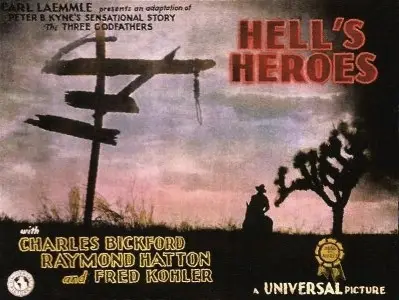 Hell's Heroes1929Also directed by William Wyler
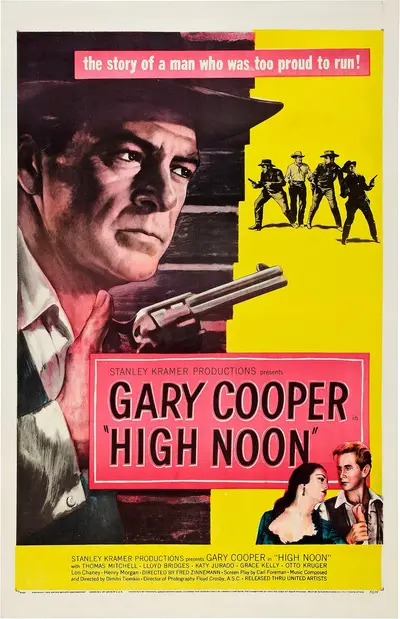 High Noon1952Also starring Gary Cooper
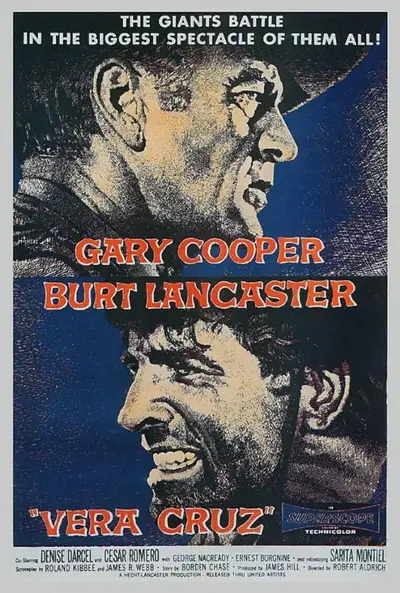 Vera Cruz1954Also starring Gary Cooper
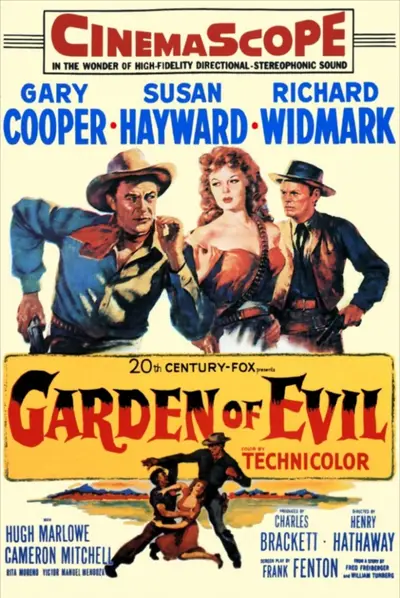 Garden of Evil1954Also starring Gary Cooper


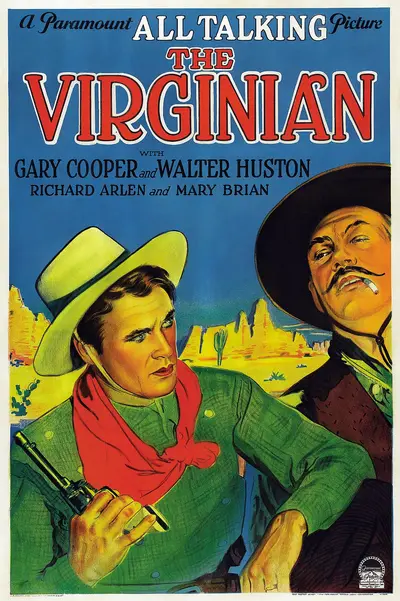 The Virginian1929Also starring Gary Cooper
Frontier folk
This film is listed on: Corrupt lawmen and officials · Lynch mobs and vigilantes · Rustlers and horse thieves (all Frontier folk)
Gallery 6


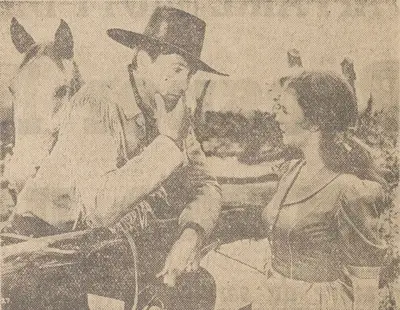

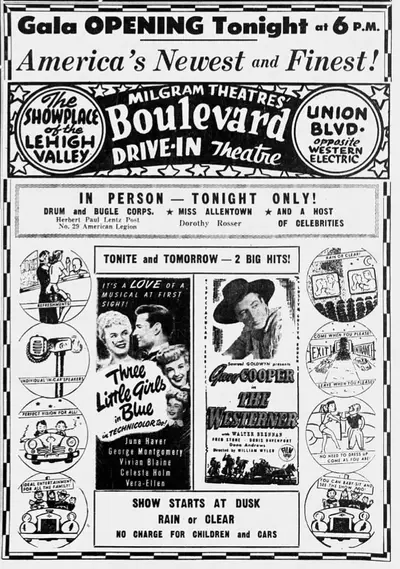

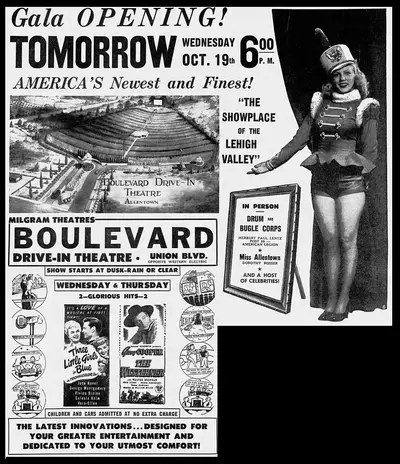


True Grit RatingWhat's this?Woke: None foundSVLIMDb ★7.2Partly checked
True Grit score: 99/100, Gold Partly checked
How the score is worked out:
- Start100
- Diamond needs all five checks; not met (raw score under 109; IMDb under 7.0 or under 10,000 votes): 100 → 99
- Presumed (Hays Code, 1934–1967): sex & nudity, violence, language presumed no, counted as checked0
- True Grit score99 · Gold
Classic Western checks
1 of 5 yes · Mostly classic
- Called “revisionist”YesYes: described as revisionist, or as taking apart the Western's myths.[1]
- Settlers or cavalry as villainsNoIn the film, the villain is Judge Roy Bean, with his cattle-rancher allies; the hero sides with the homesteaders, and new settlers arrive at the end.[2]
- Faith shown negativelyNoNo: Hays-era titles presume no faith attack unless a source flags one.[2]
- History rewrittenNoNo: an invented story set among real people or events; it does not claim to be a true story.[2][1]
- A people shown as villainsNoNo: no ethnic, national or religious people is cast as the enemy as a group; the villains are individuals.[3]
Woke content (modern messaging)
None found0 of 8 items found so far
Show all 8 (2 not found · 6 not known)
Unless noted: Unknown.
- Characters recast for representationNot knownFrom a story by Stuart N.[2]
- Gender roles reversed or critiquedNot known
- Present-day political languageNot known
- Allegory for current politicsNot foundReleased in 1940, before the 21st-century debates this item covers, so it cannot be an allegory of them.[2]
- Western civilisation framed as inherently guiltyNot known
- Environmental activismNot foundNo: no source raises an environmental message (5 Nov 2026).[2]
- Source material changed for messagingNot known
- LGBT or gender-identity themesNot known
Content guide
- SSex & nudityPresumed no
- VViolencePresumed no
- LLanguagePresumed no
Presumed no (Hays Code)
NoneMildModerateStrongNot known
Audience
★ 7.2/10 from viewers on IMDb (7.7k votes)No deduction (5.0 and up).
Sources
- Grokipedia: The Westerner (checked 18 October 2026)
- Wikipedia: The Westerner (plot) (checked 18 October 2026)
- Once Upon a Time in a Western (February)
Information courtesy of IMDb (https://www.imdb.com). IMDb rating as of 13 October 2026.
Checked 18 October 2026 · Reviewed by Frontier Editor
Partly checked: 1 check not known. Not known items are left out of the score.
Member reviews
What members think. Member reviews never change the True Grit score. The True Grit score is worked out by the editors from sources.
Sources
- The Westerner (1940 film) - Wikipedia en.wikipedia.org
- Wikidata: Q1150612 wikidata.org
- Wikimedia Commons: Eiganotomo-2-1951-page1.jpg commons.wikimedia.org
- The Westerner - Britannica britannica.com
- IMDb Non-Commercial Datasets developer.imdb.com
- The westerner q29sbgvjdglvbjpwwc0ynjy5nji - bbfc.co.uk bbfc.co.uk
- Rotten Tomatoes (score via Wikidata) rottentomatoes.com
- Metacritic (score via Wikidata) metacritic.com
- Wikimedia Commons: 1949 - Boulevard Drive-In First Ad - 19 Oct MC - Allentown PA.jpg commons.wikimedia.org
- Wikimedia Commons: 1949 - Boulevard Drive-In Opening Announcement 18 Oct MC - Allentown PA.jpg commons.wikimedia.org
- Wikimedia Commons: 1949 - Boulevard Drive-In Theater Grand Opening Ad - 19 Oct MC - Allentown PA.jpg commons.wikimedia.org
- Wikimedia Commons: Doris Davenport (1940).jpg commons.wikimedia.org
- Wikimedia Commons: Gary Cooper coupe une boucle de cheveux %C3%A0 Doris Davenport - Recueil. %22Le cavalier du d%C3%A9sert%22 film de William Wyler - btv1b10522627k (08 of 32).jpg commons.wikimedia.org
- Wikimedia Commons: Gary Cooper rencontre Doris Davenport - Recueil. %22Le cavalier du d%C3%A9sert%22 film de William Wyler - btv1b10522627k (06 of 32).jpg commons.wikimedia.org